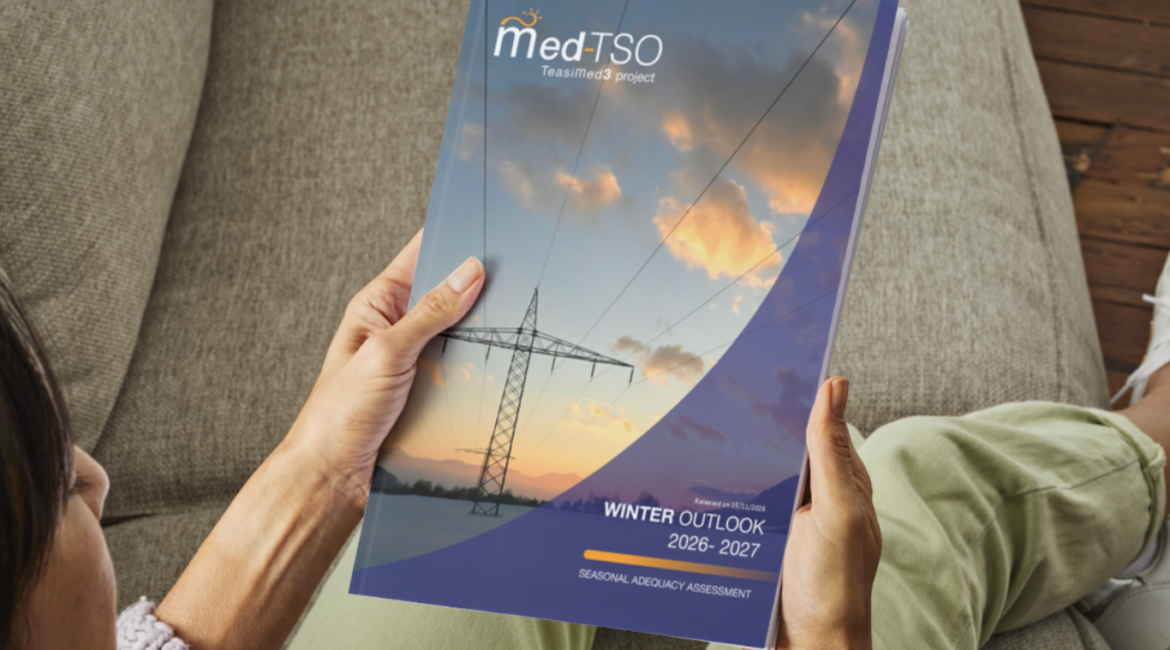
Med-TSO has officially released the Winter Outlook 2026/2027 report. This comprehensive assessment evaluates the energy security and power grid resilience of six countries: Morocco, Tunisia, Libya, Egypt, Jordan, and Lebanon. Covering the critical period from 23 November 2026 to 4 April 2027, the study aligns with global best practices and with the latest developments in EU regulation, applying rigorous stress testing to determine if each nation has sufficient generation and import capacity to meet electricity demand, even during extreme winter conditions.
To understand the true readiness of the Mediterranean power systems, the Winter Outlook 2026/2027 utilizes a robust, data-driven methodology. The assessment models 36 climate years from the new Pan-European Climate Database (PECD 4.2), combined with random power plant outages. This results in 684 simulated winters, each modeled hour by hour to test the limits of the grid.
The report evaluates grid resilience through two primary lenses:
- Isolated: How a country’s power grid performs relying solely on its own domestic resources.
- Interconnected: How the system performs when able to exchange electricity with neighboring countries.
Key security indicators include the Loss of Load Expectation (LOLE), Expected Energy Not Served (EENS), and Relative EENS (EENS as a percentage of total demand). The stress test also examines a severe “once-in-20-years” (P95) winter scenario to uncover deep systemic vulnerabilities.
The definitive conclusion of the 2026/2027 report is that interconnections turn regional cooperation into tangible hours of secured supply. While countries like Morocco, Egypt, and Tunisia face negligible risk and could act as crucial regional exporters, other nations see striking, measurable benefits from cross-border grid integration, like Libya, Jordan, and Lebanon.
Explore the full methodology, data tables, and regional insights, downloading the the full report