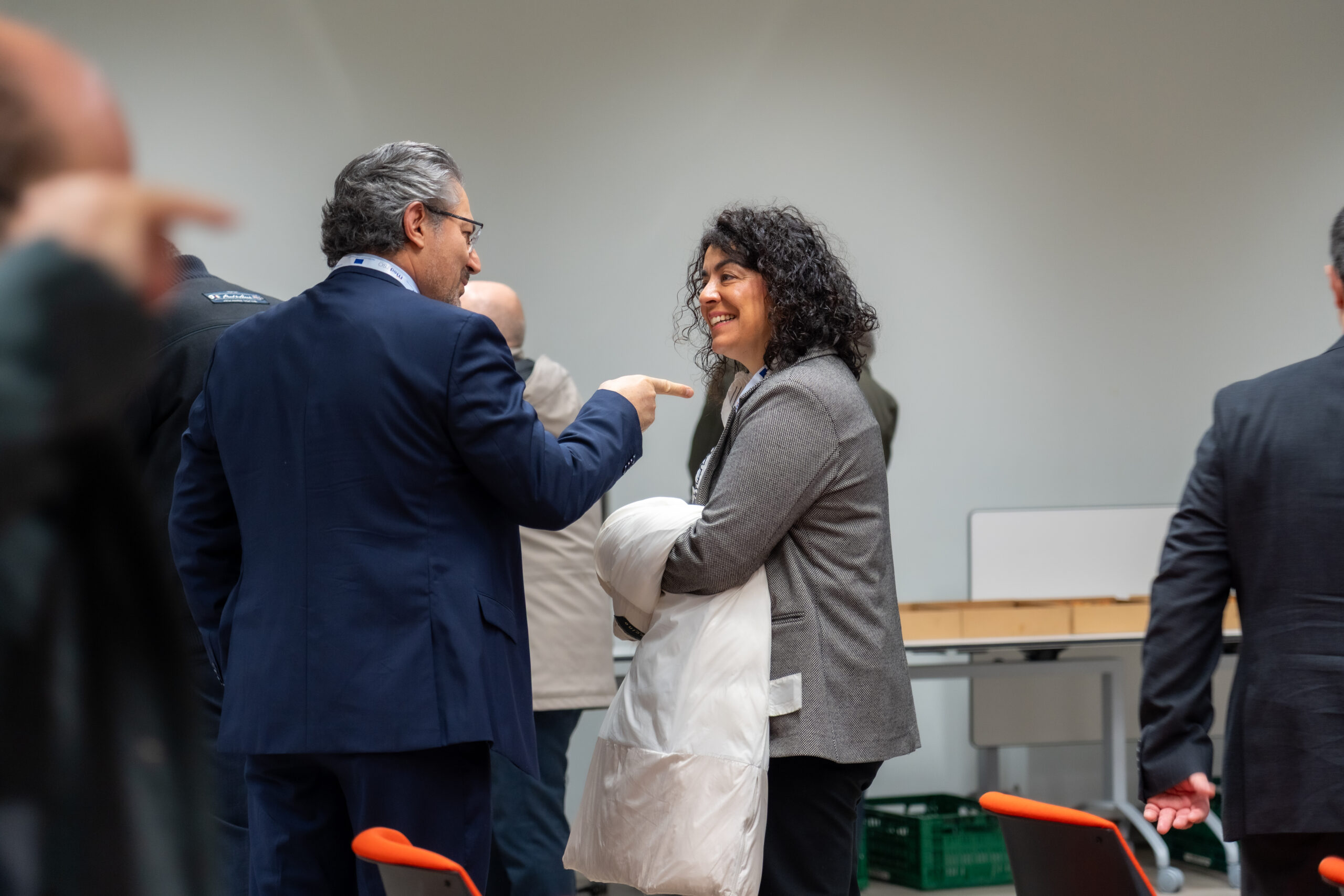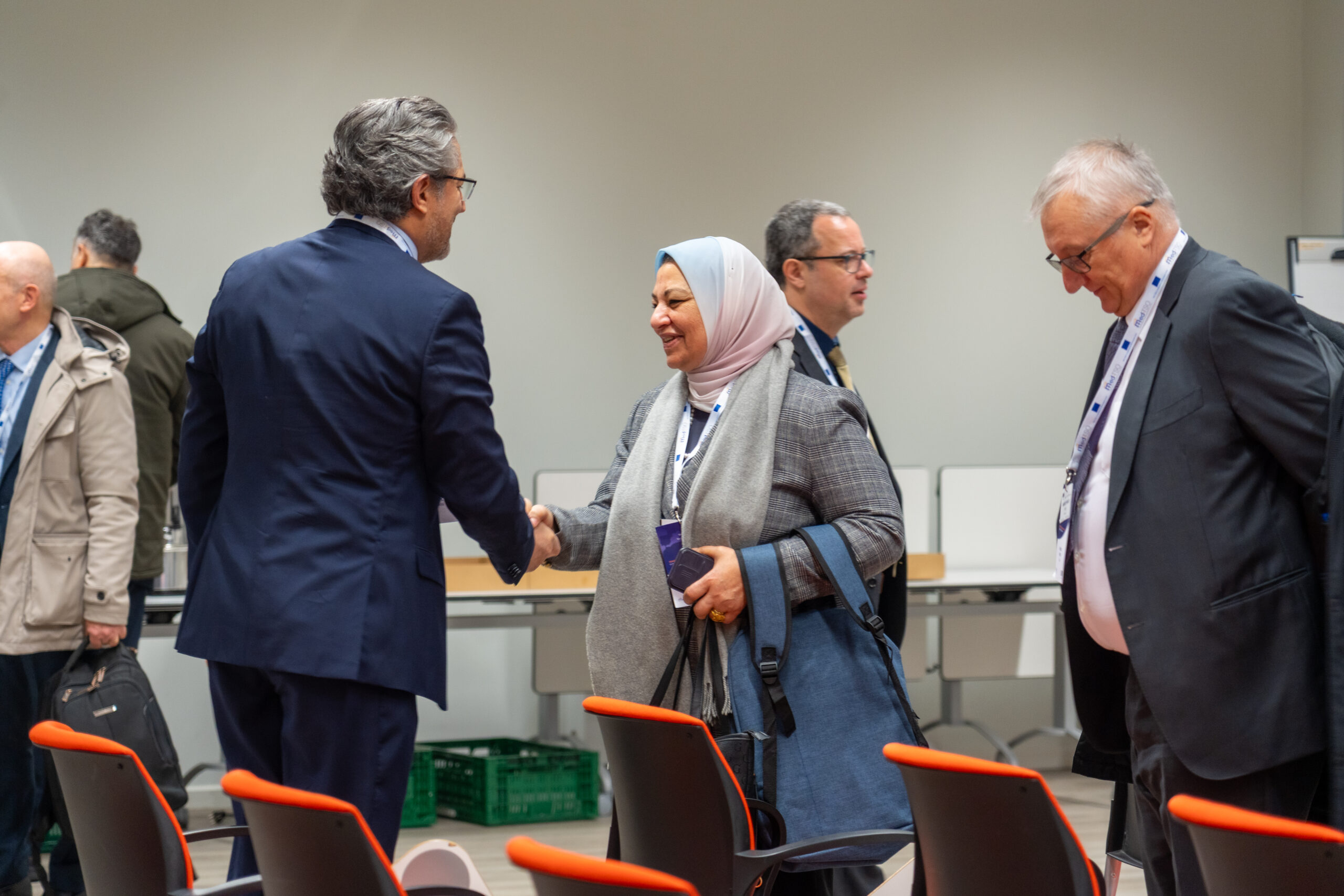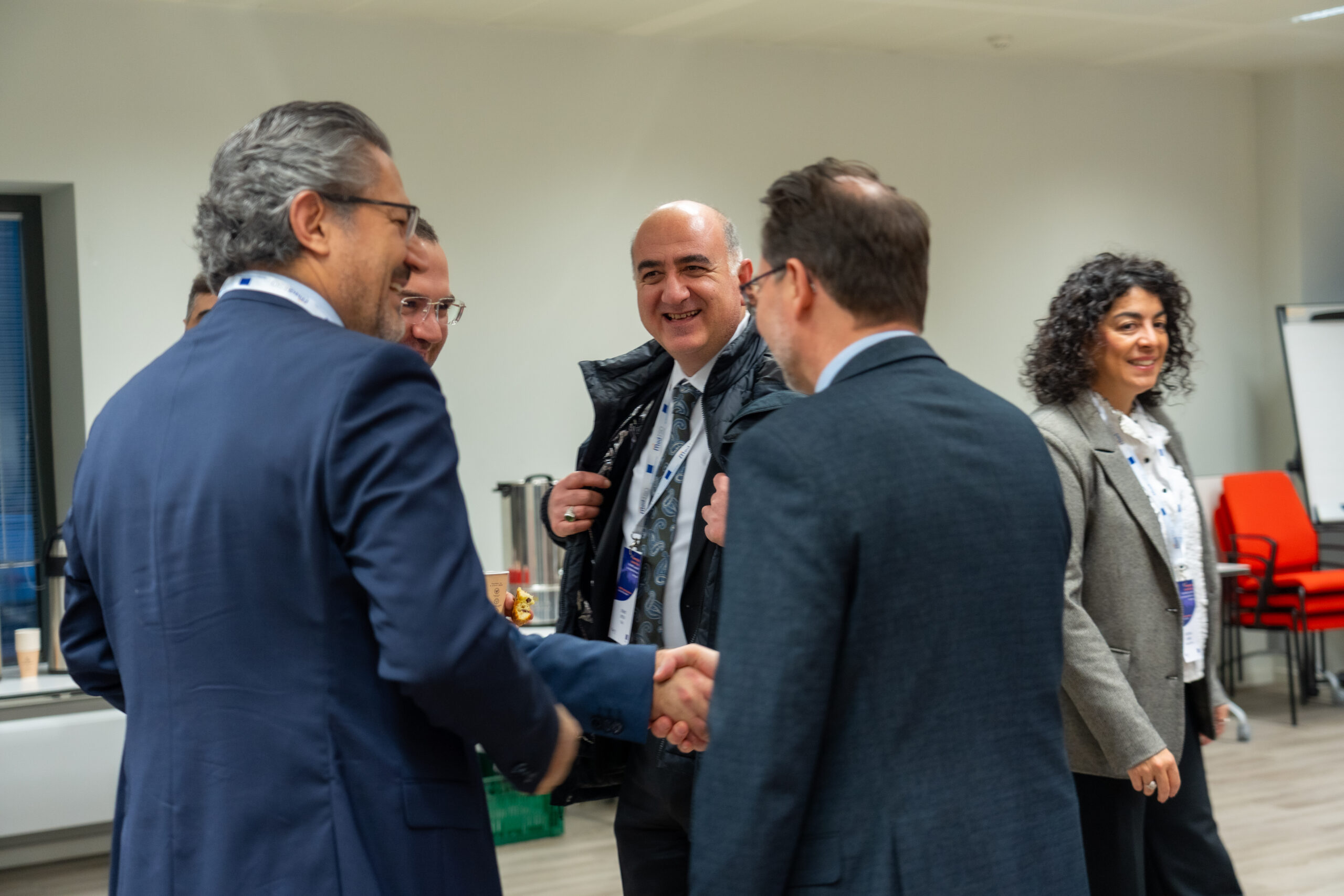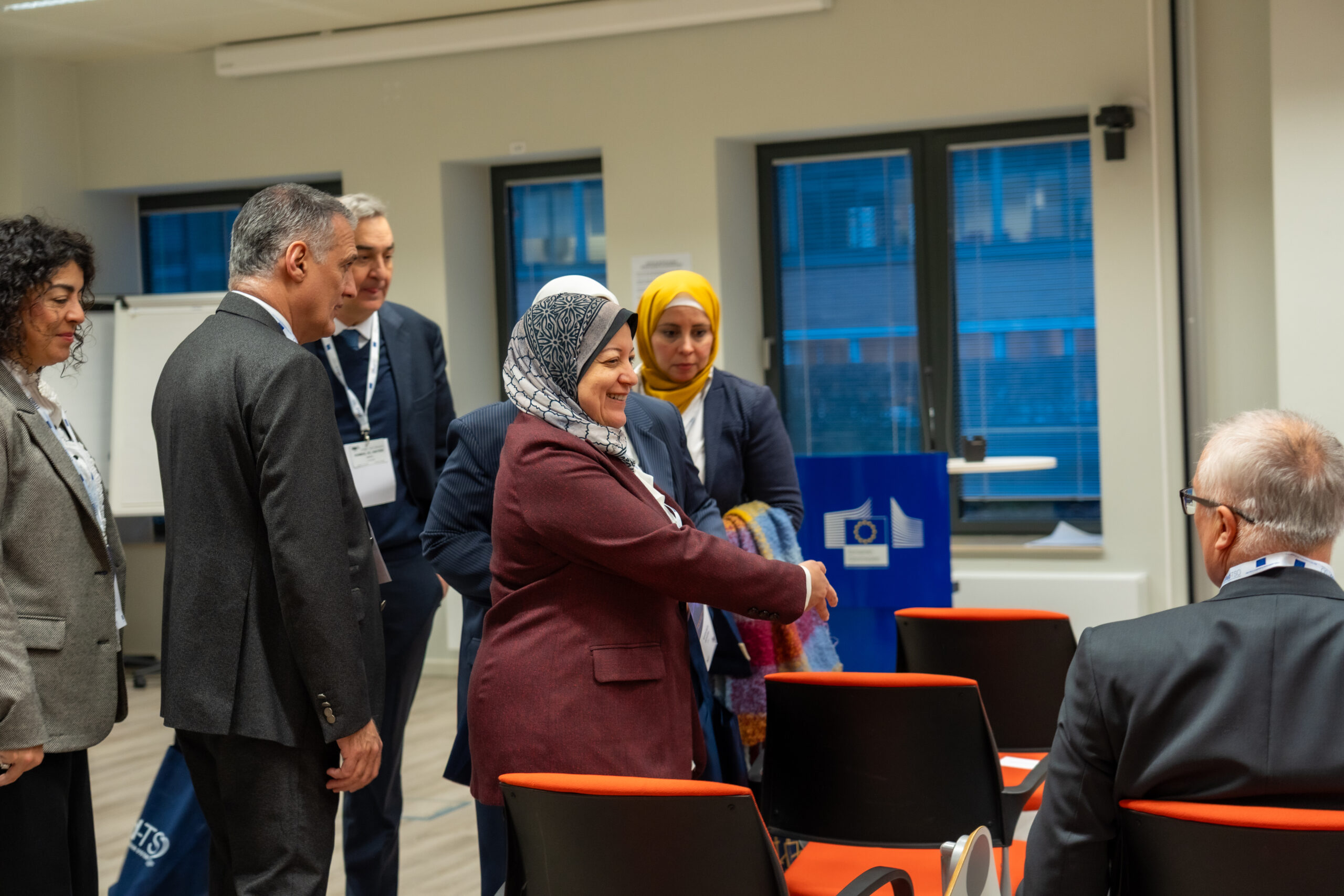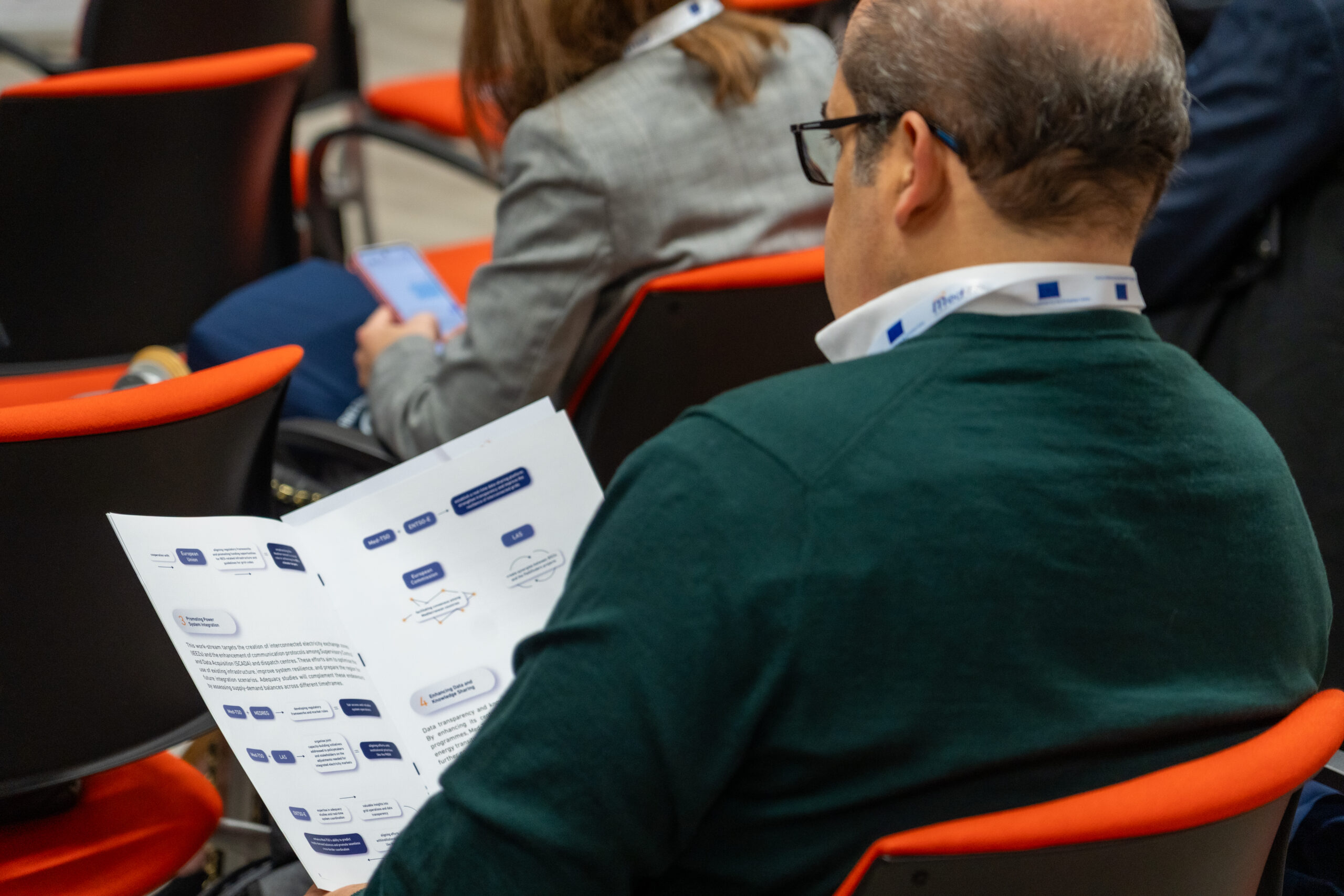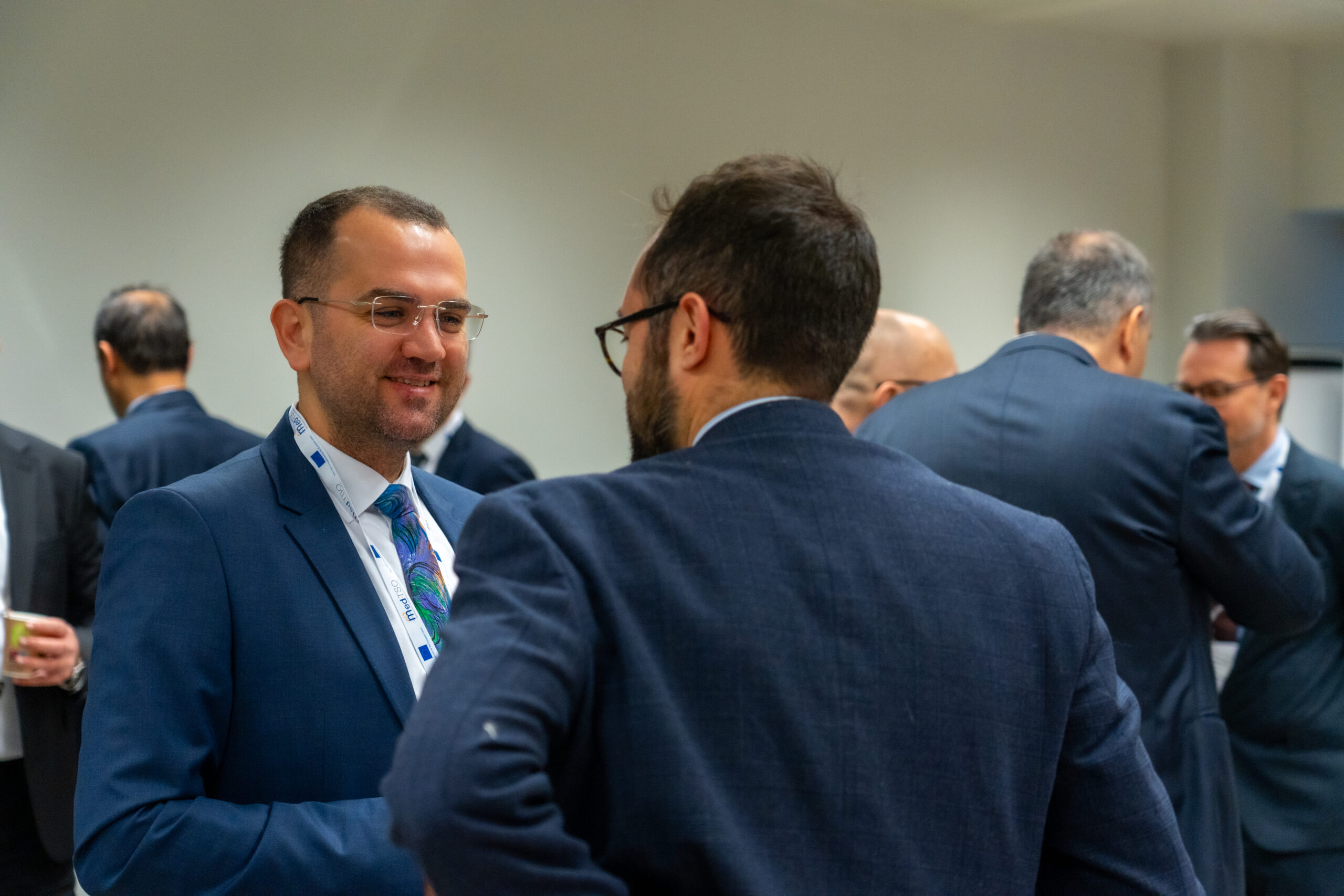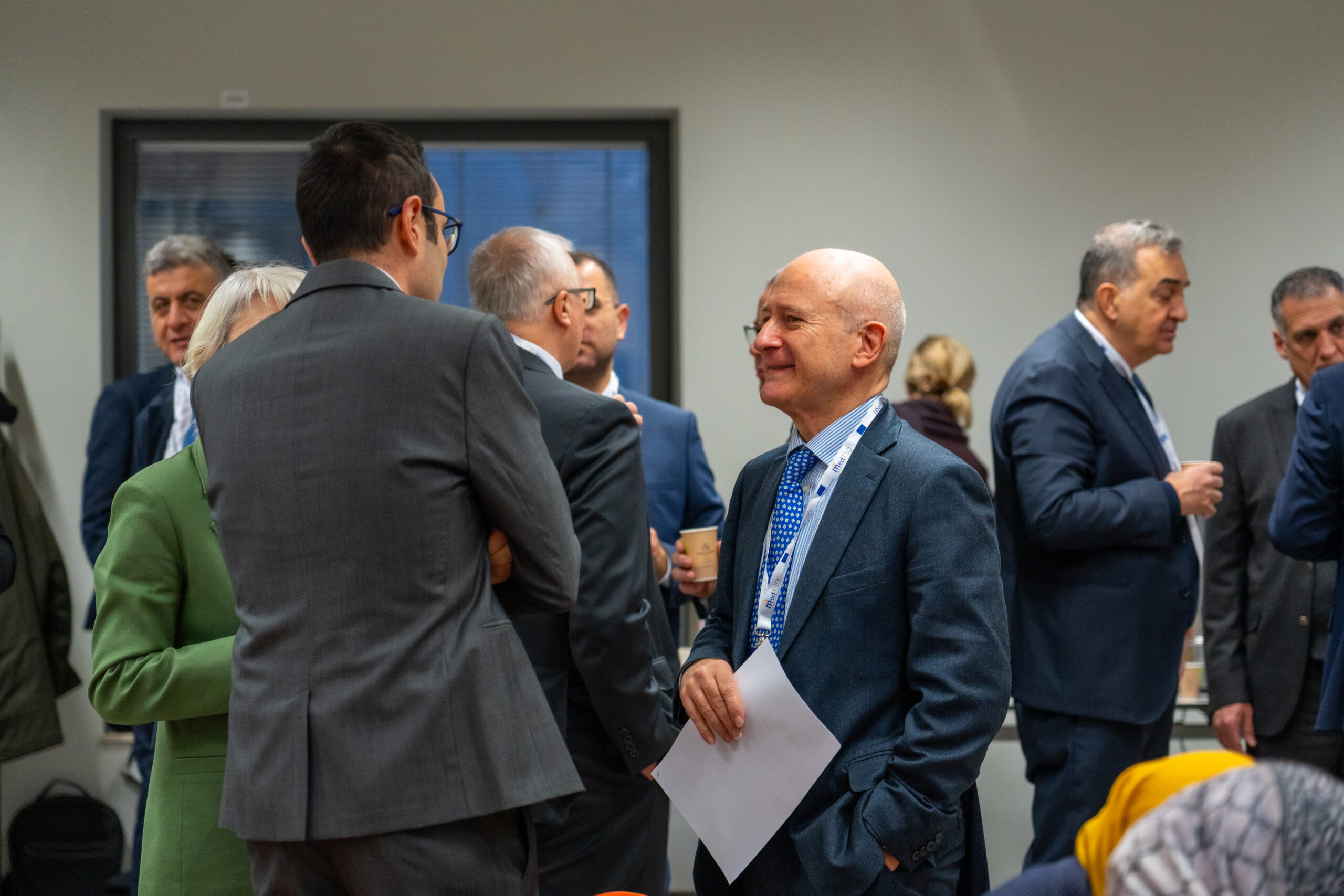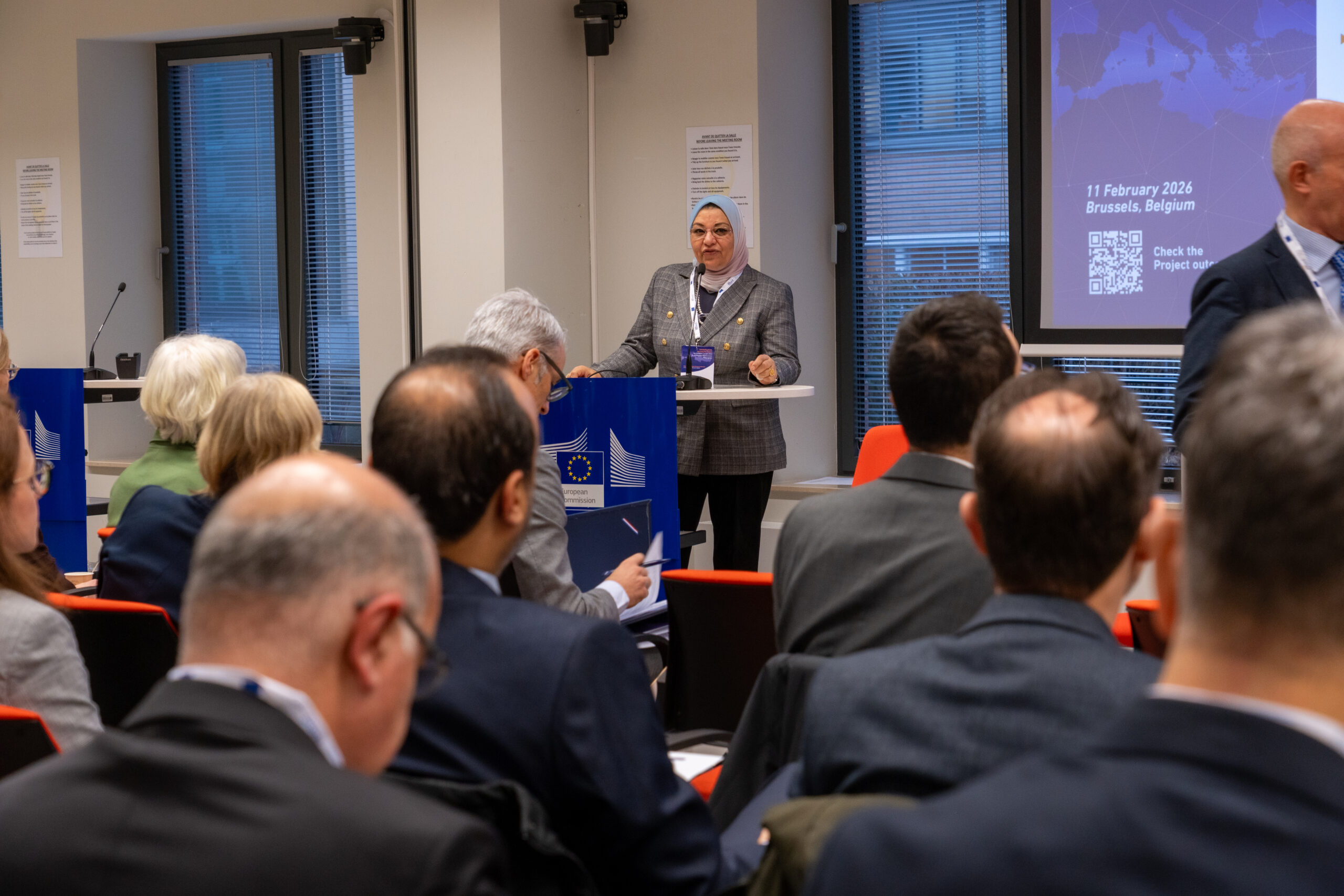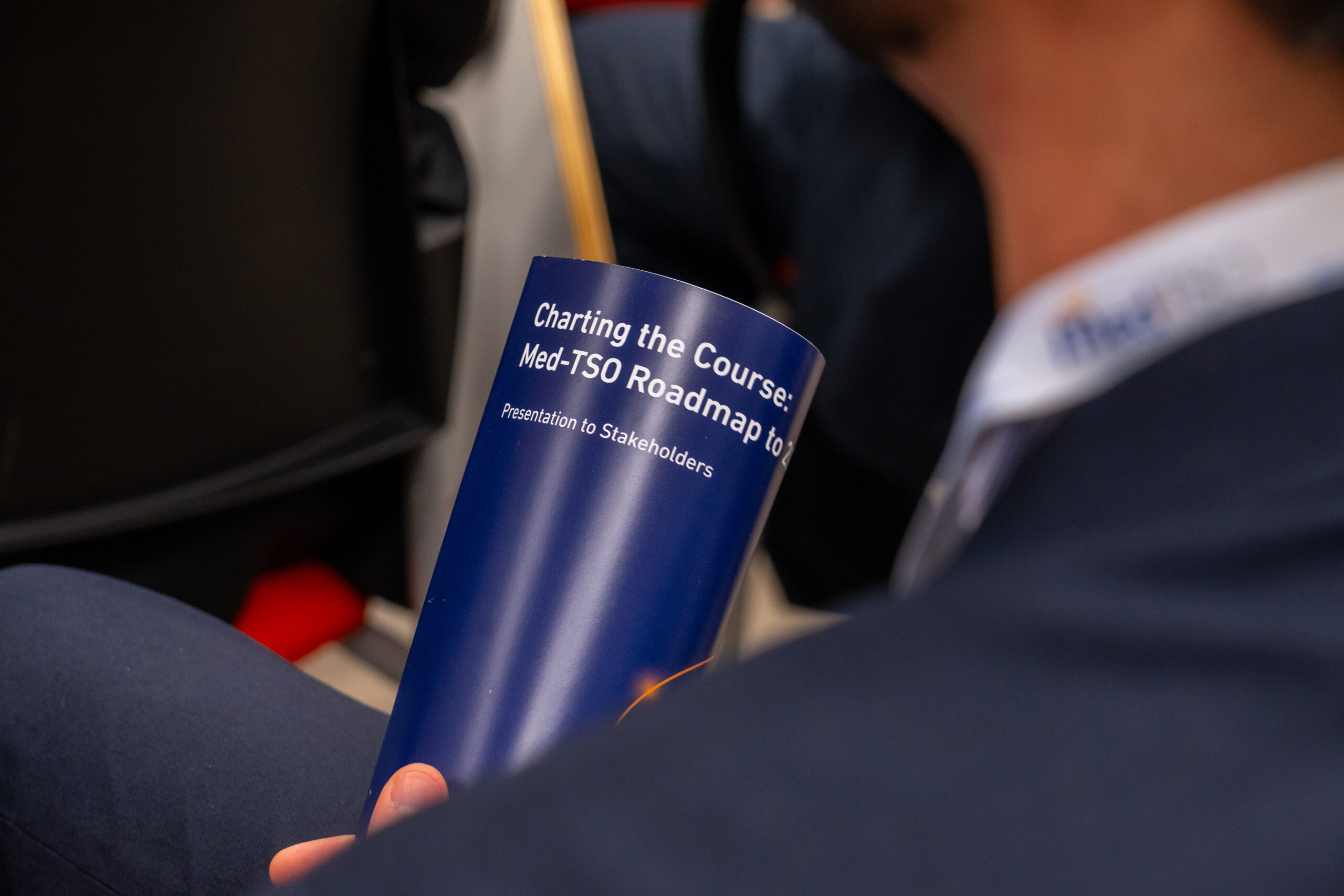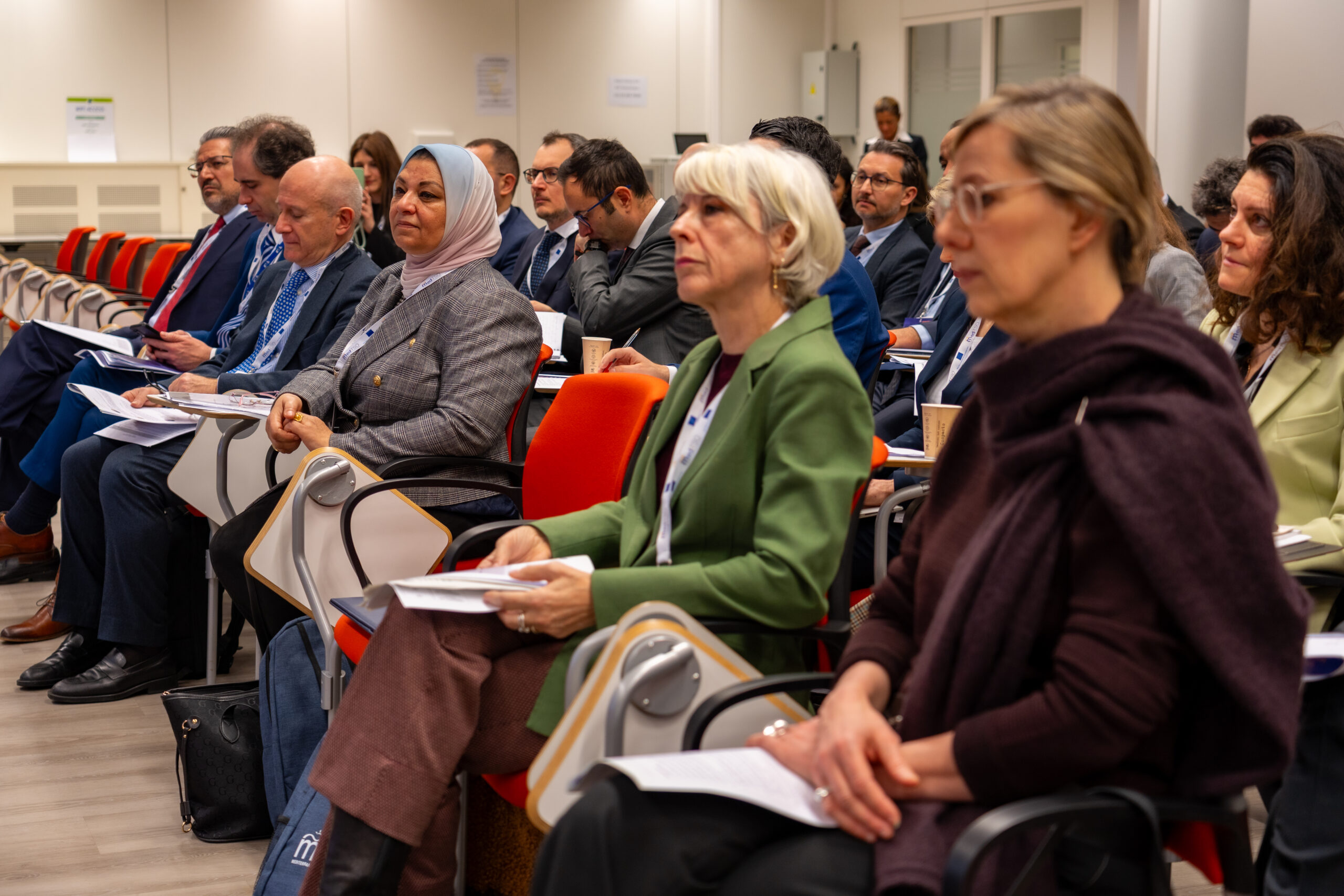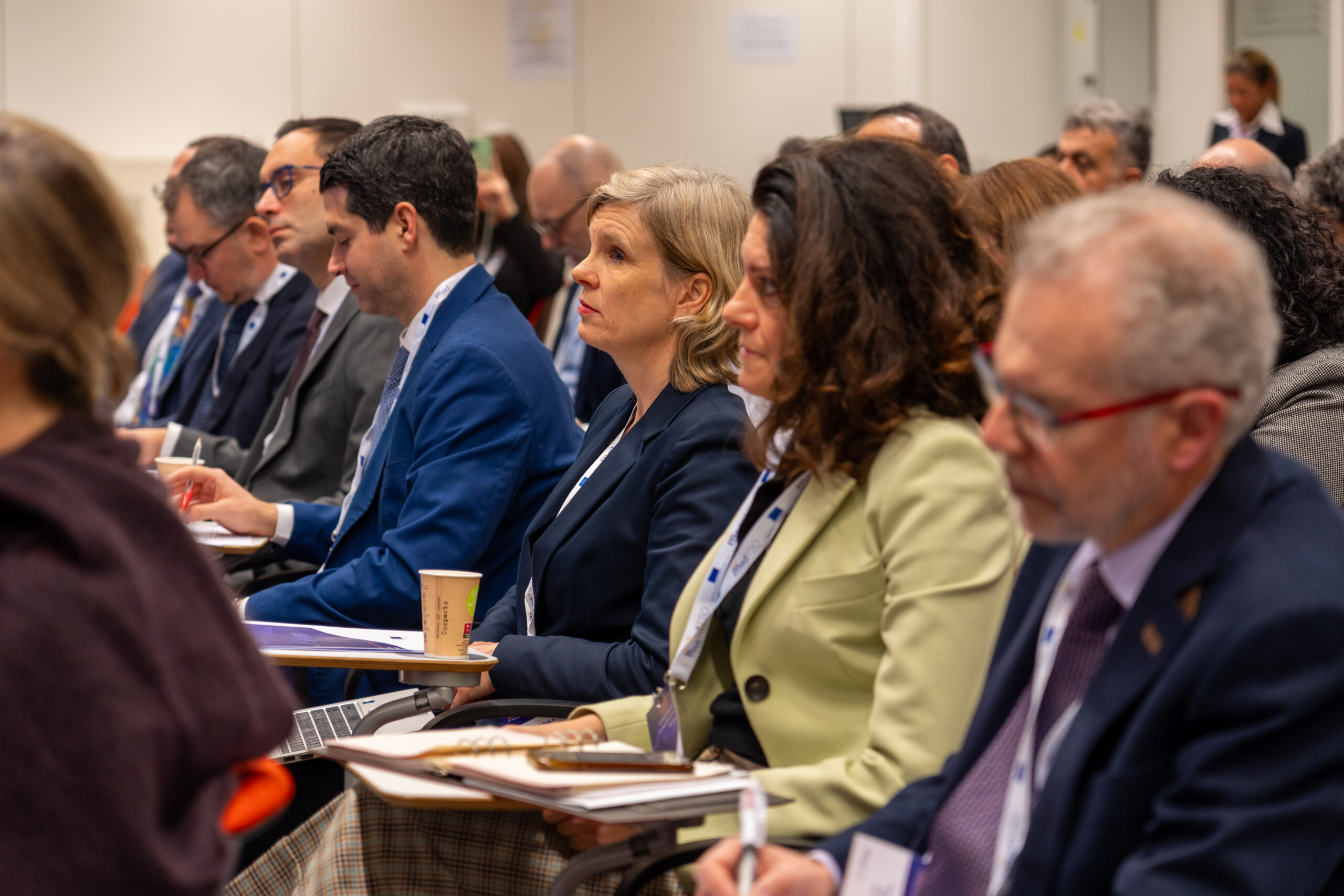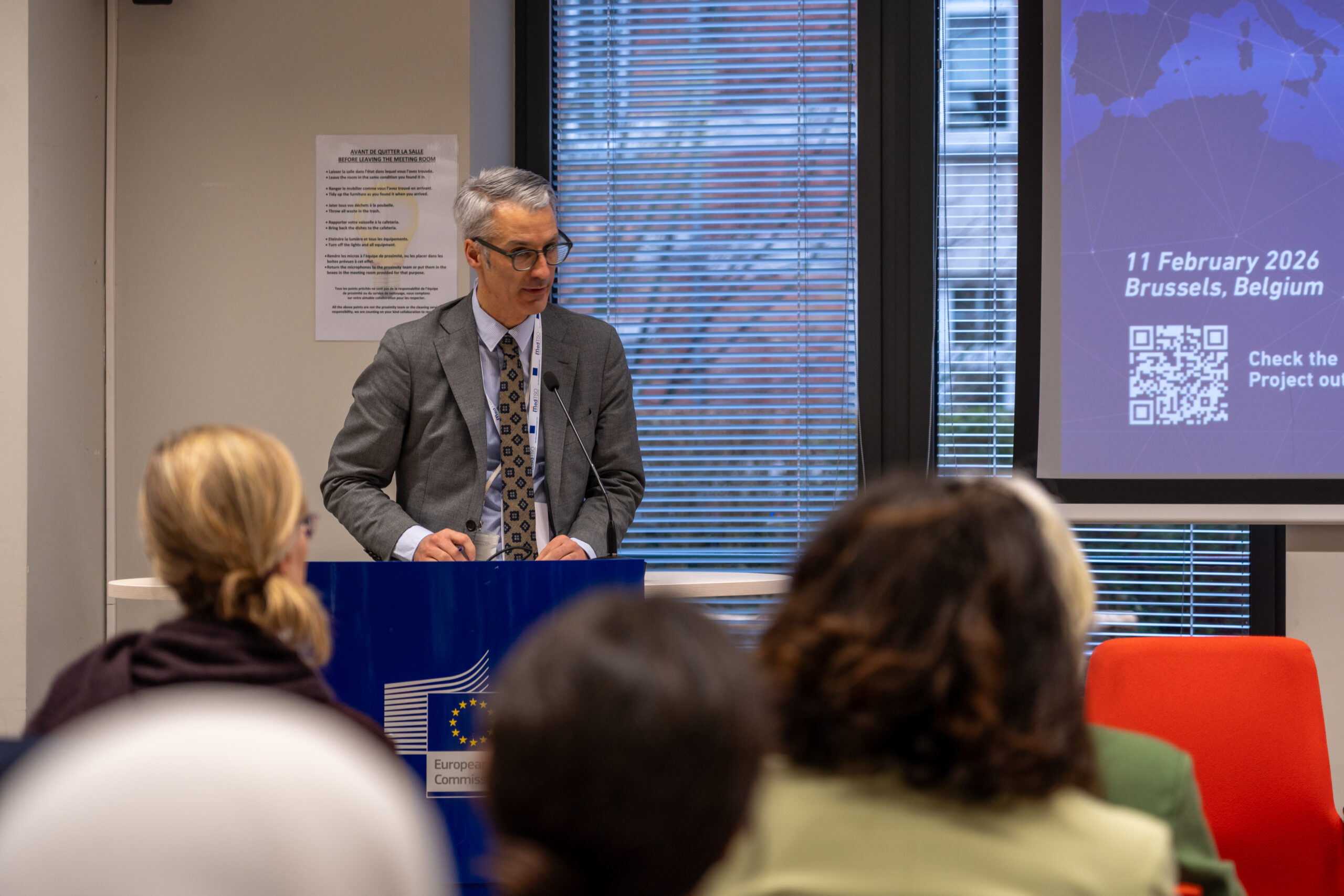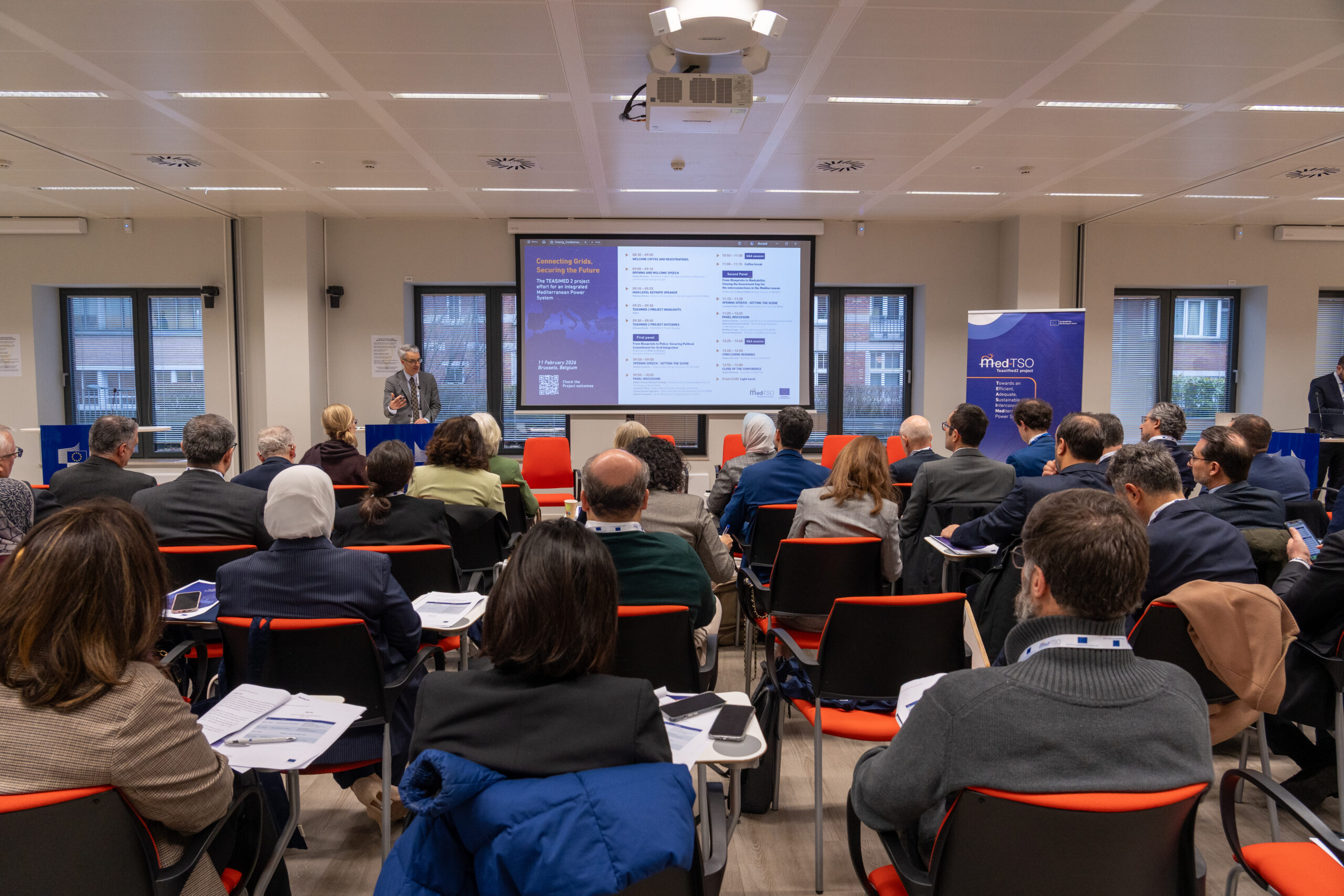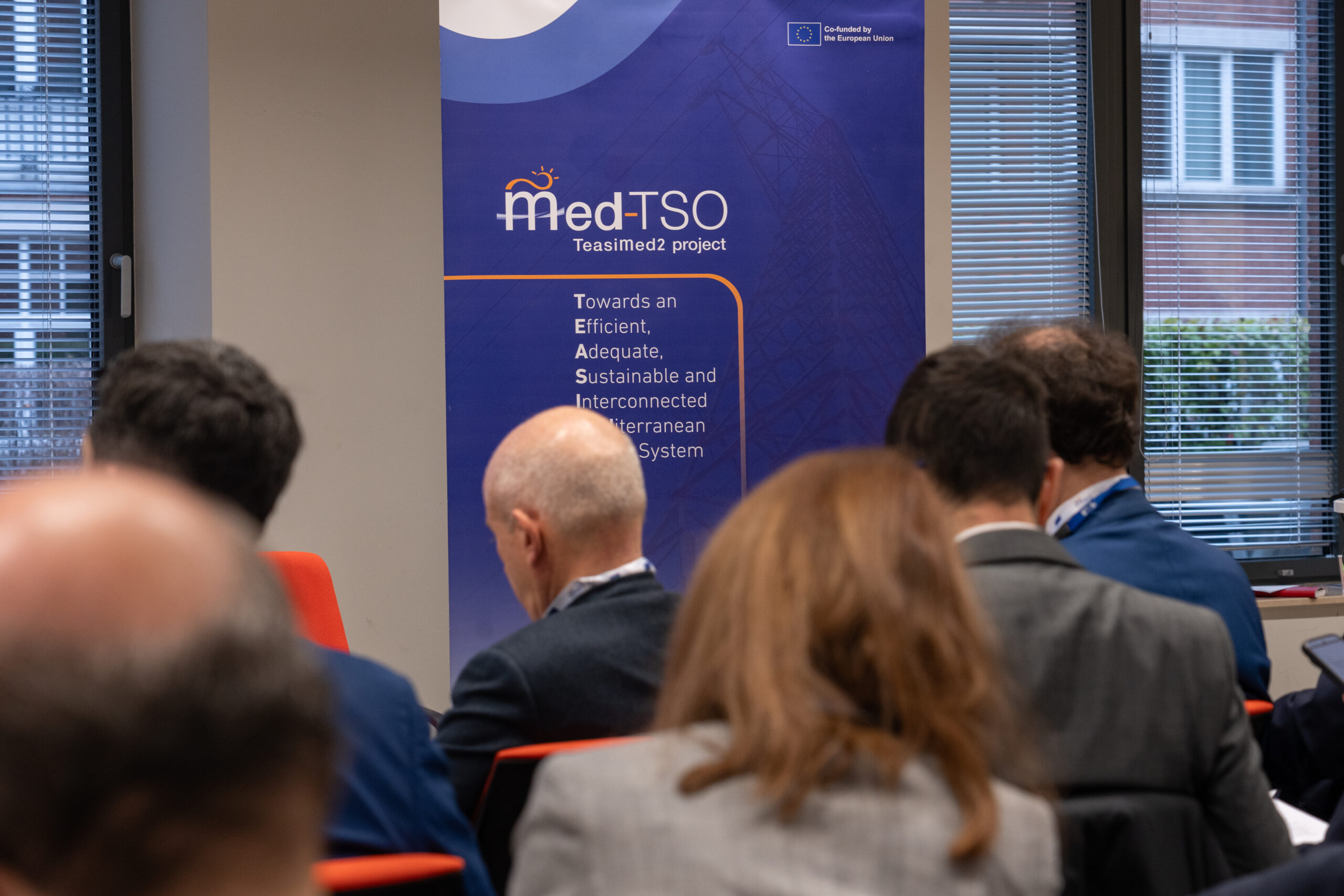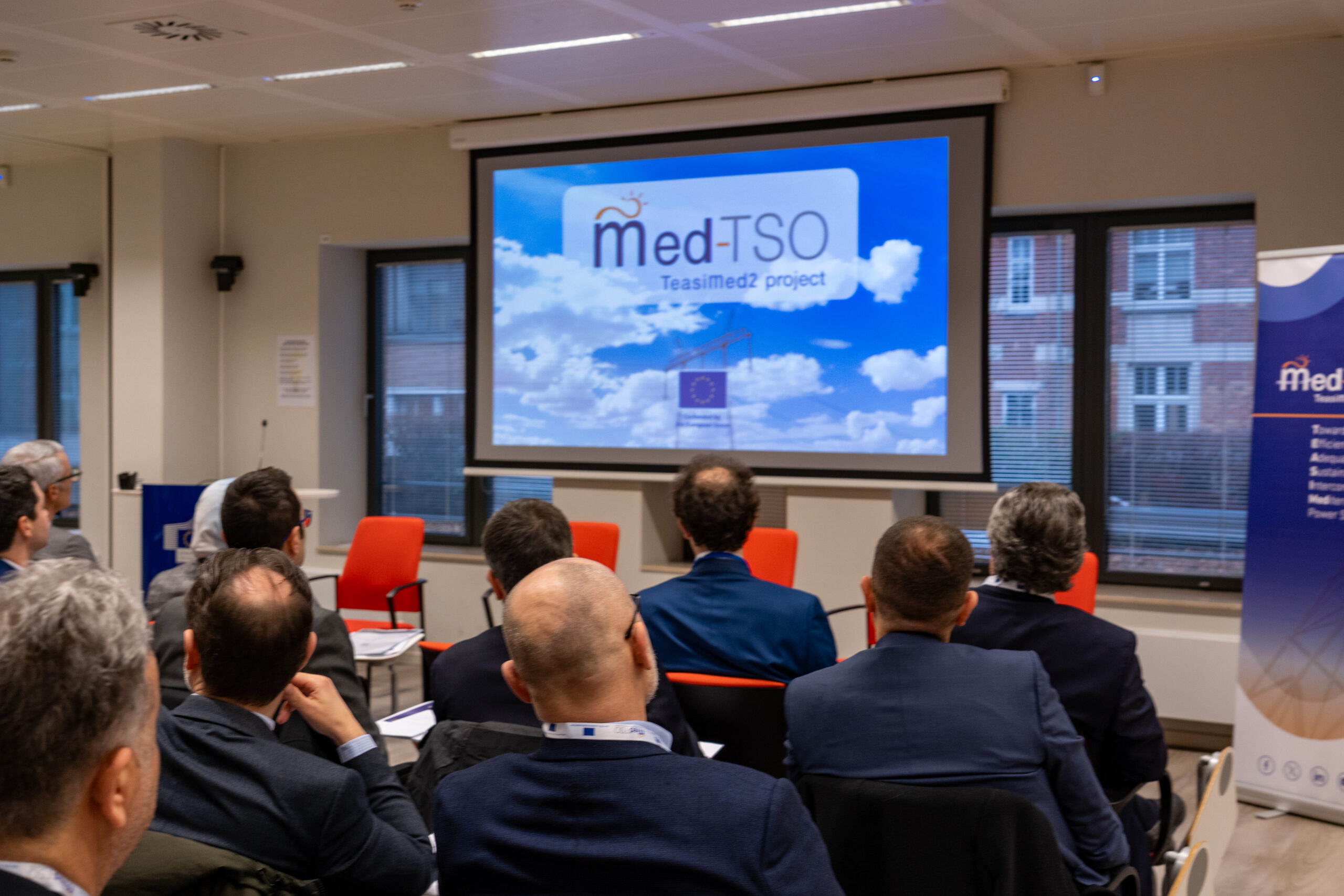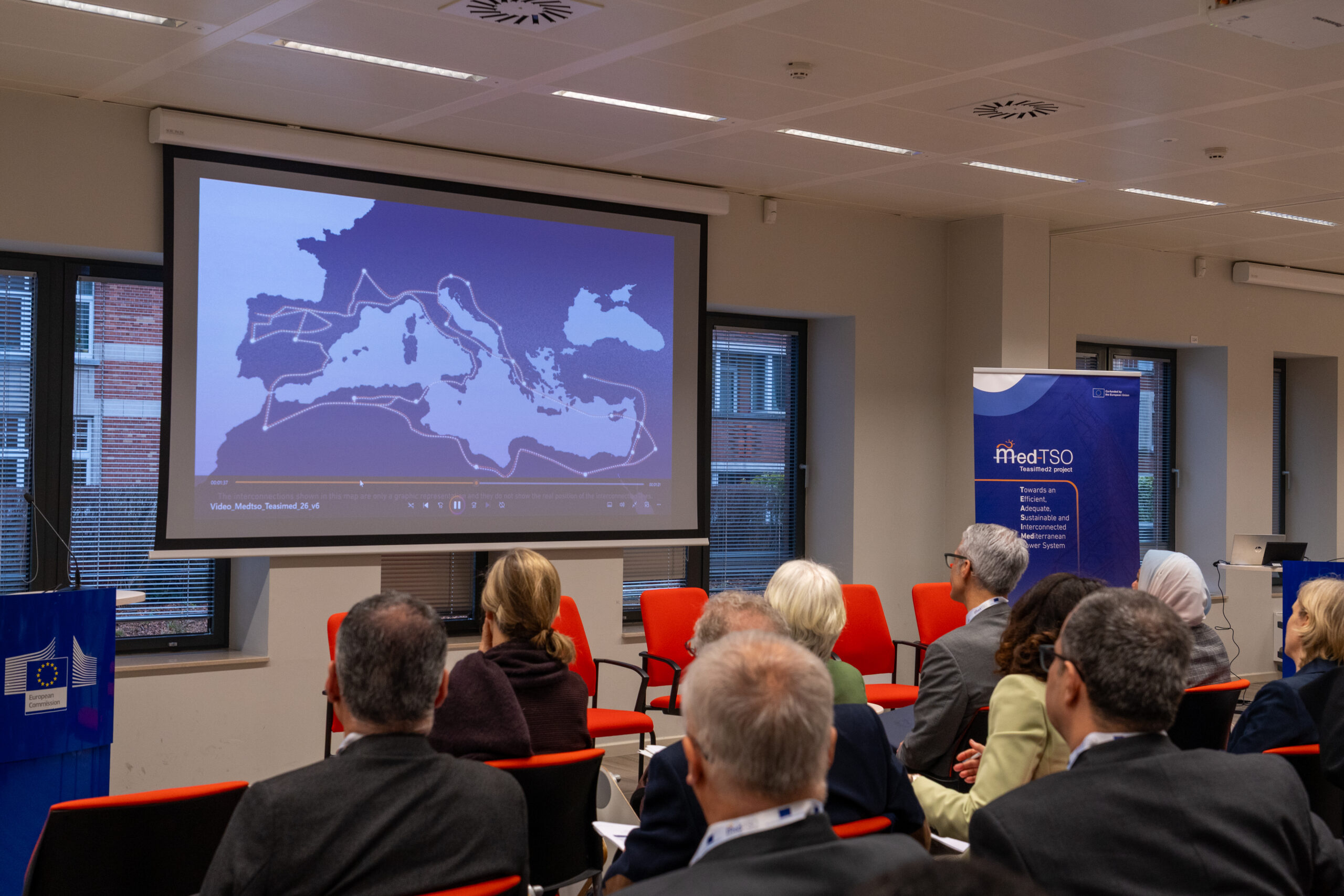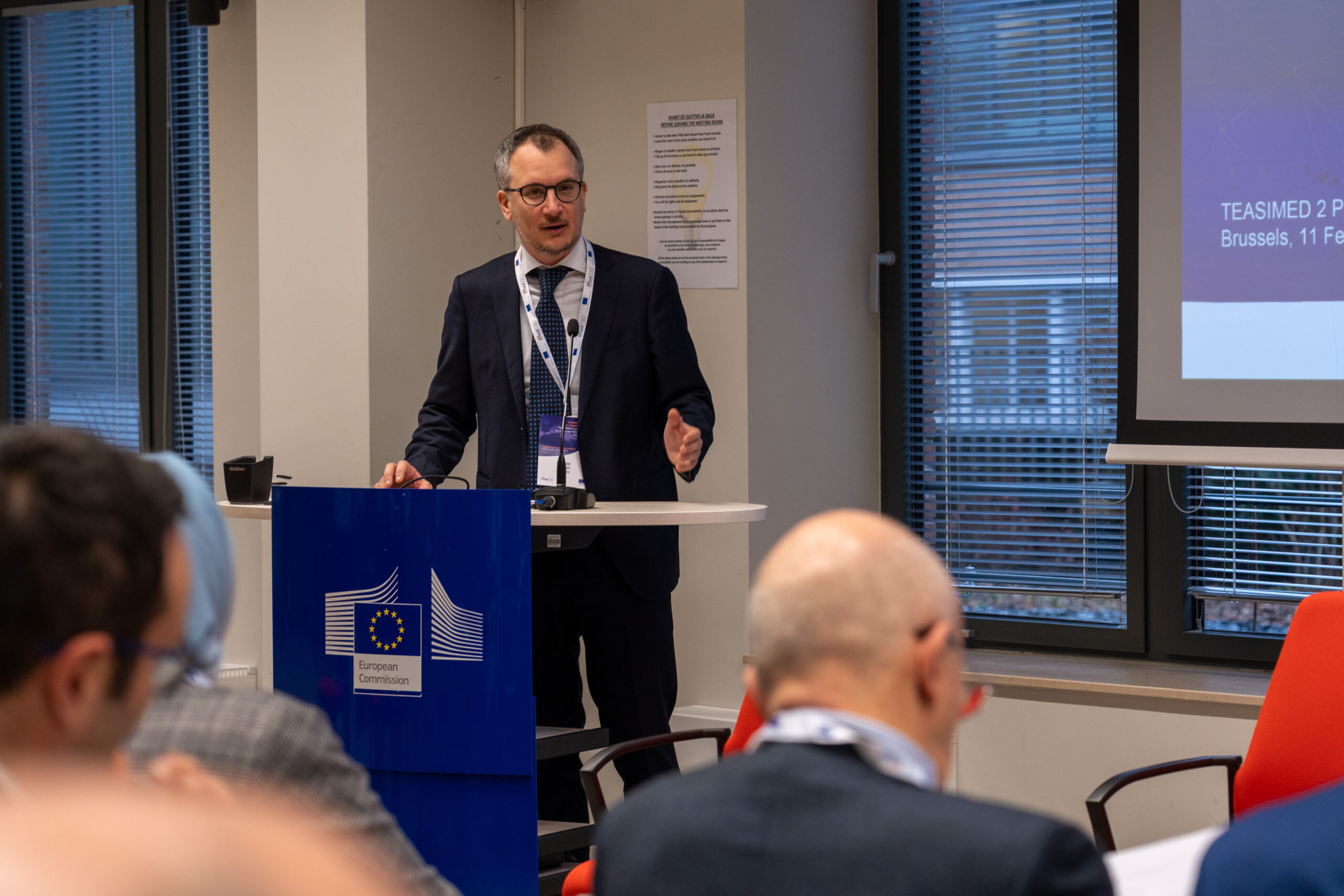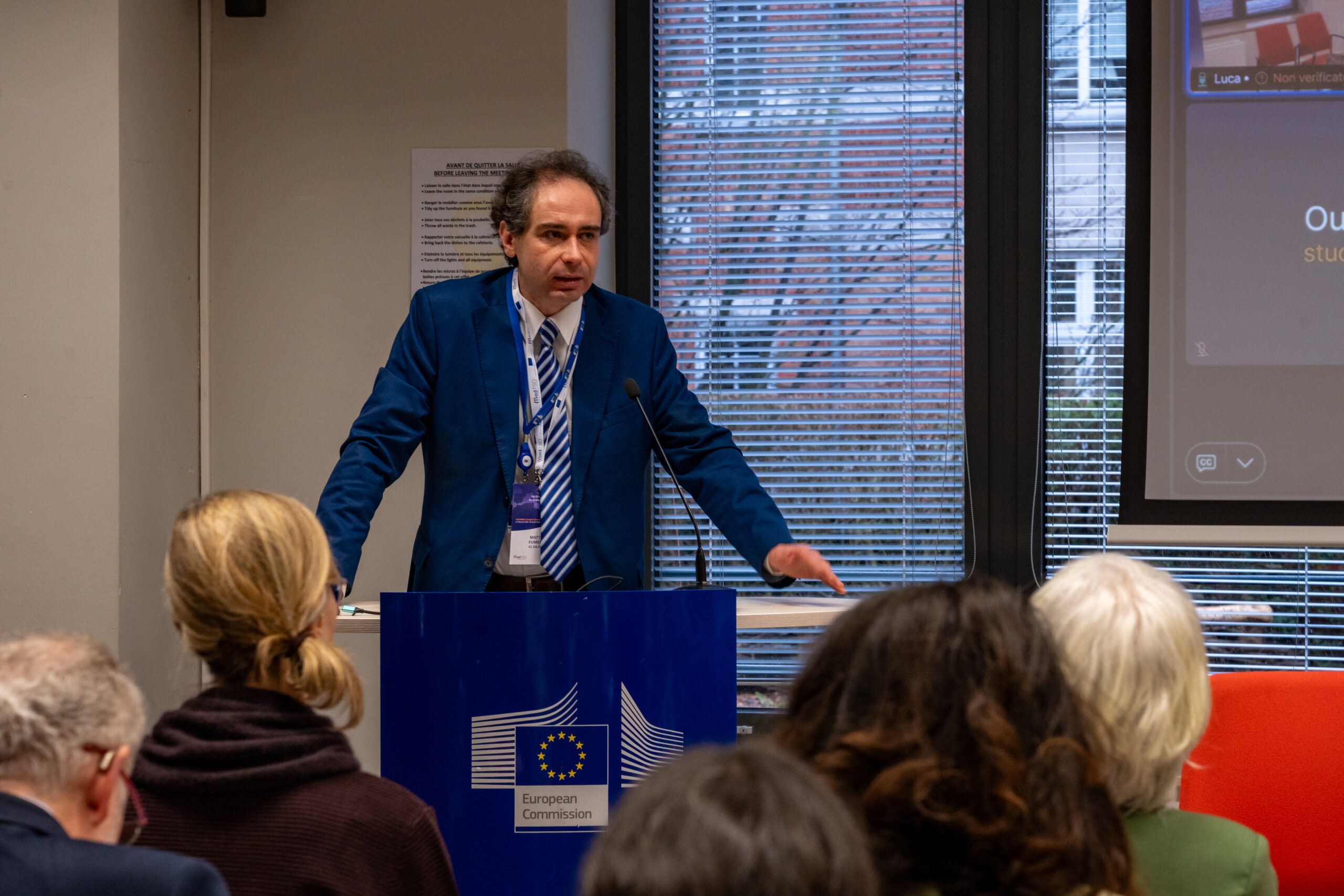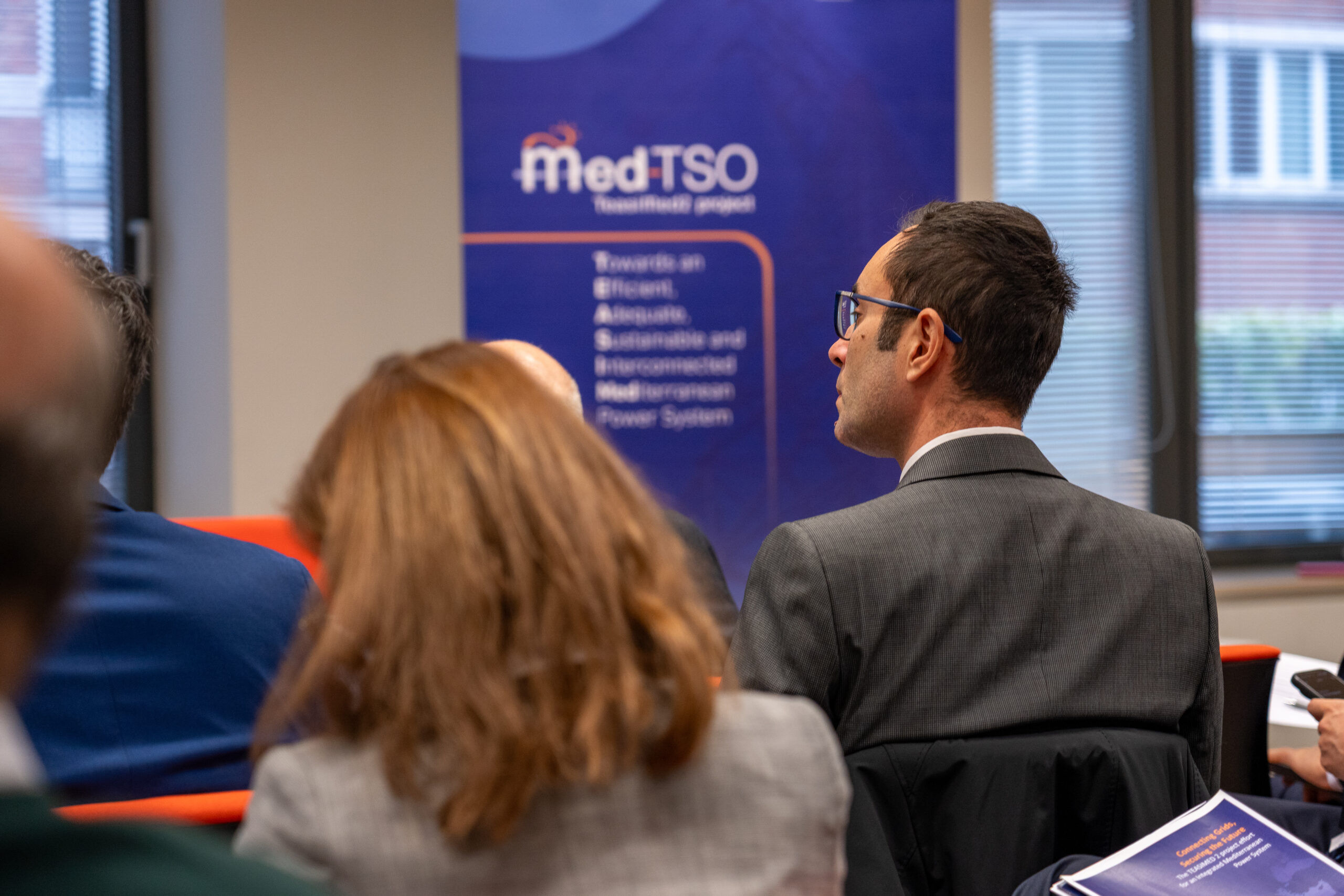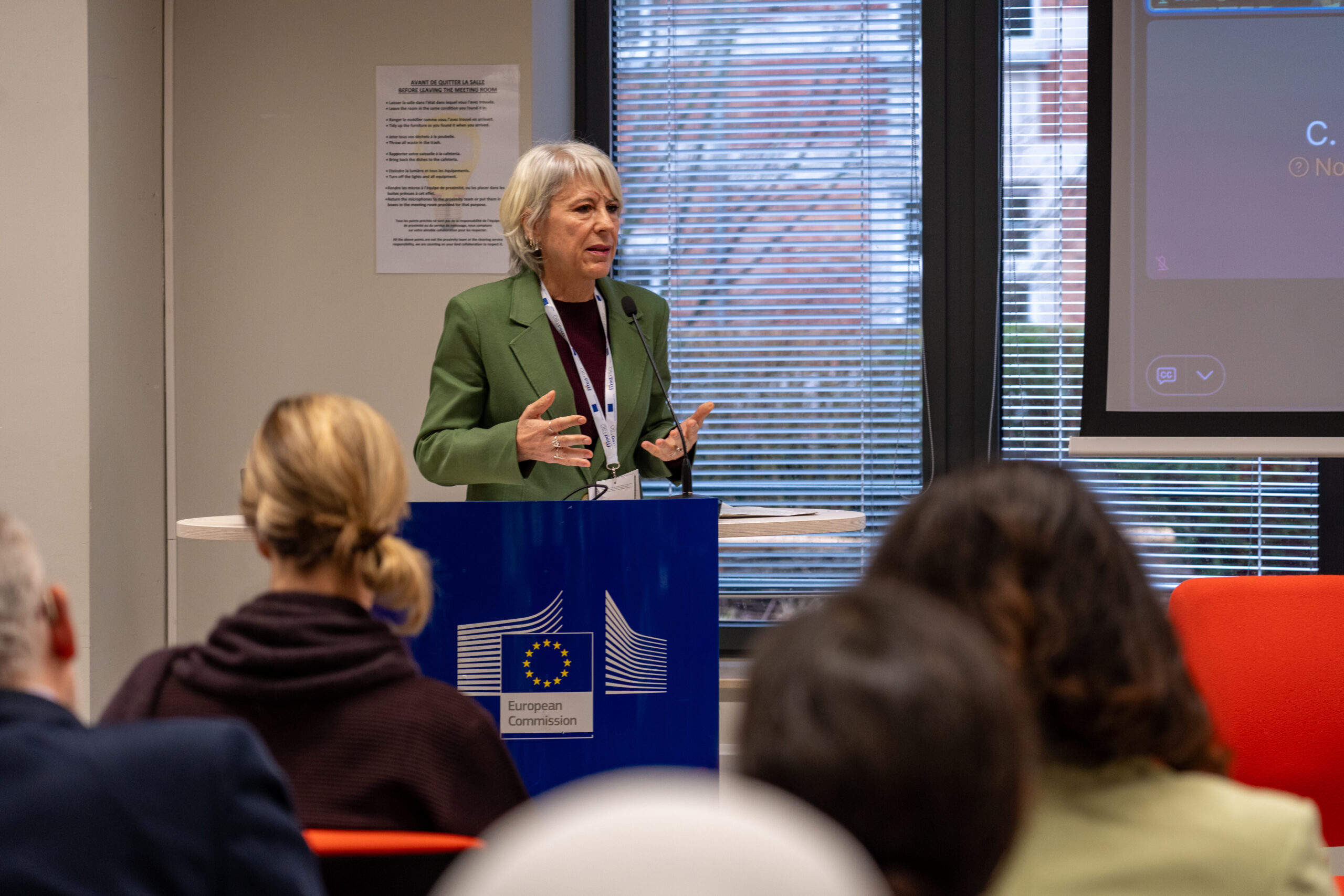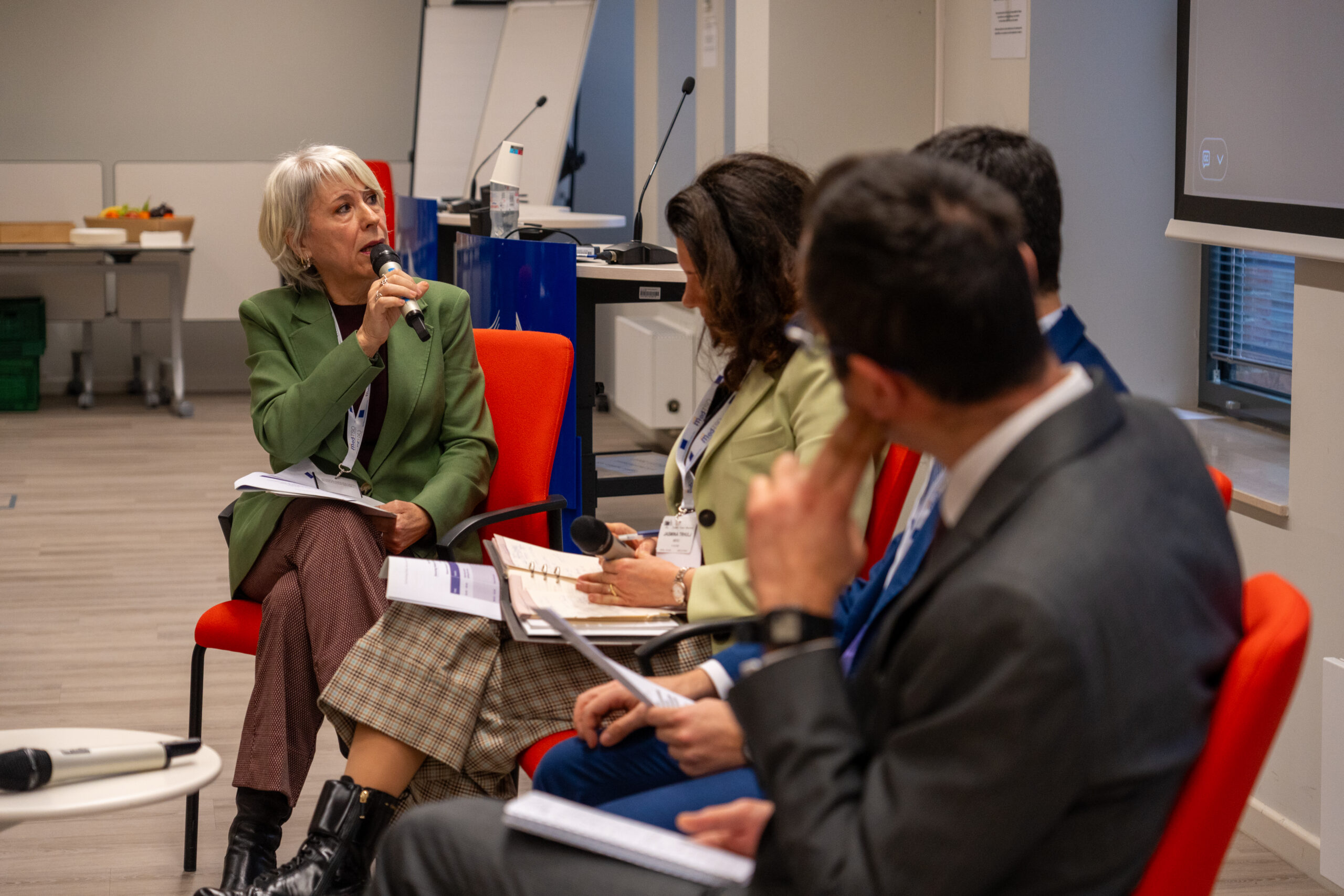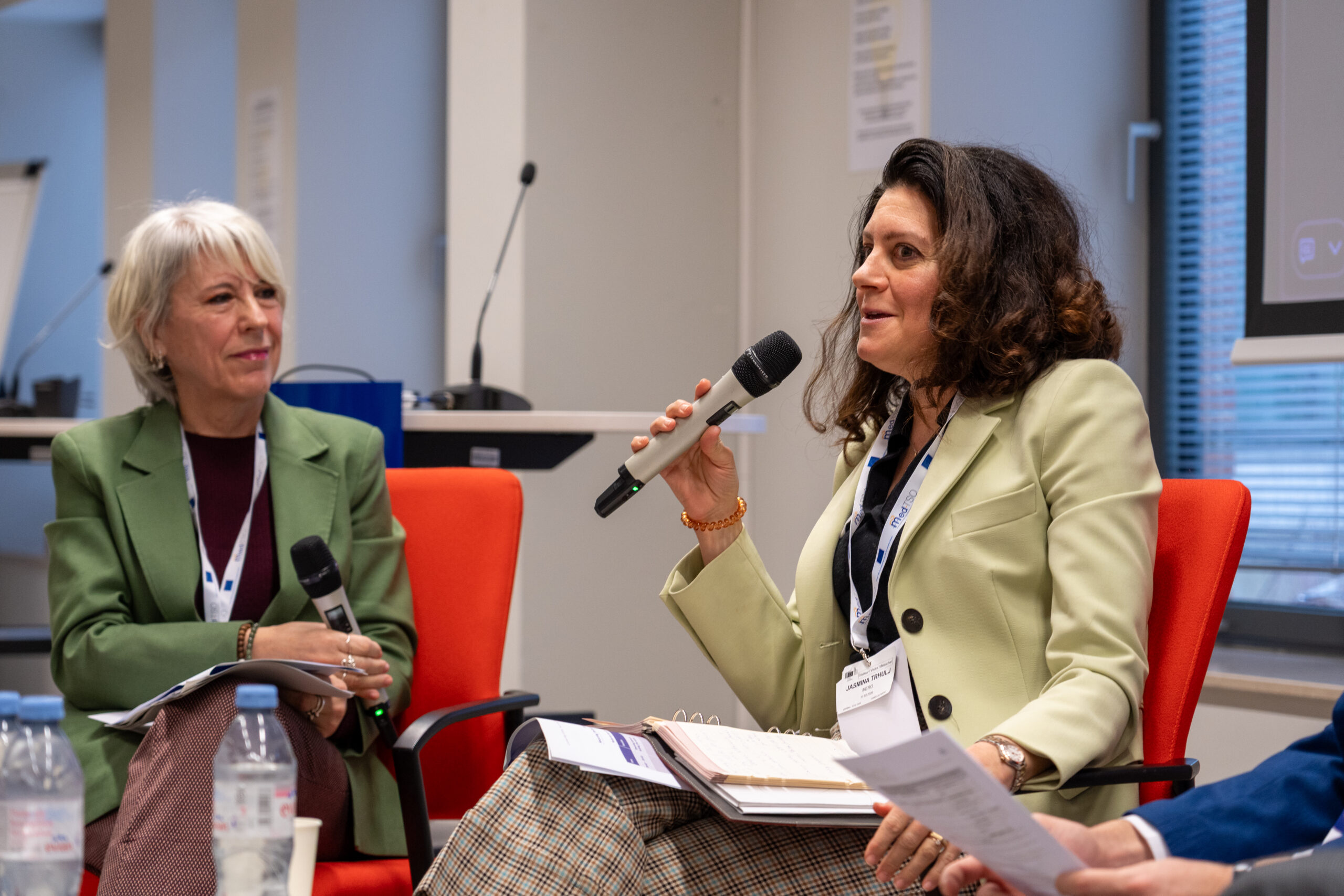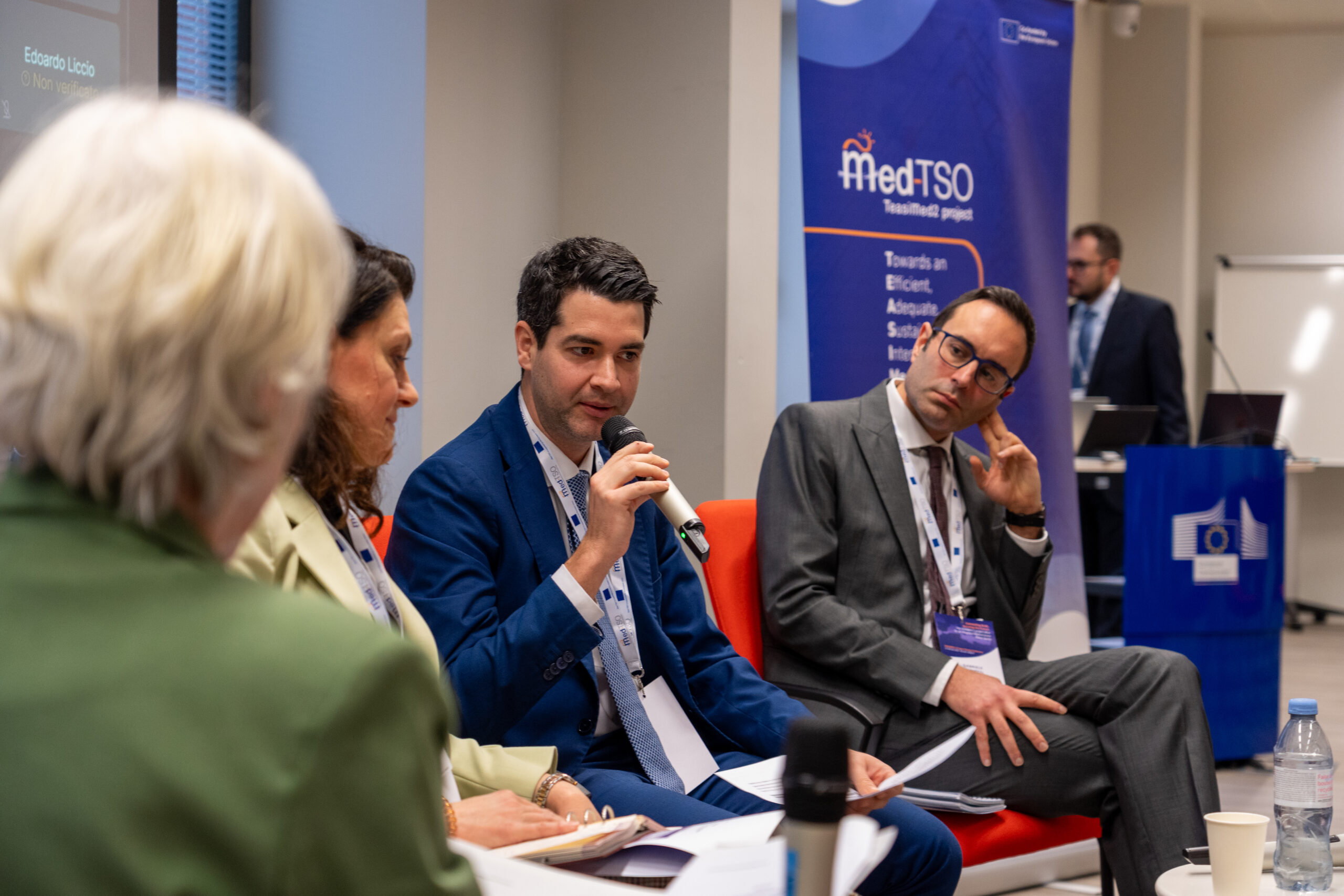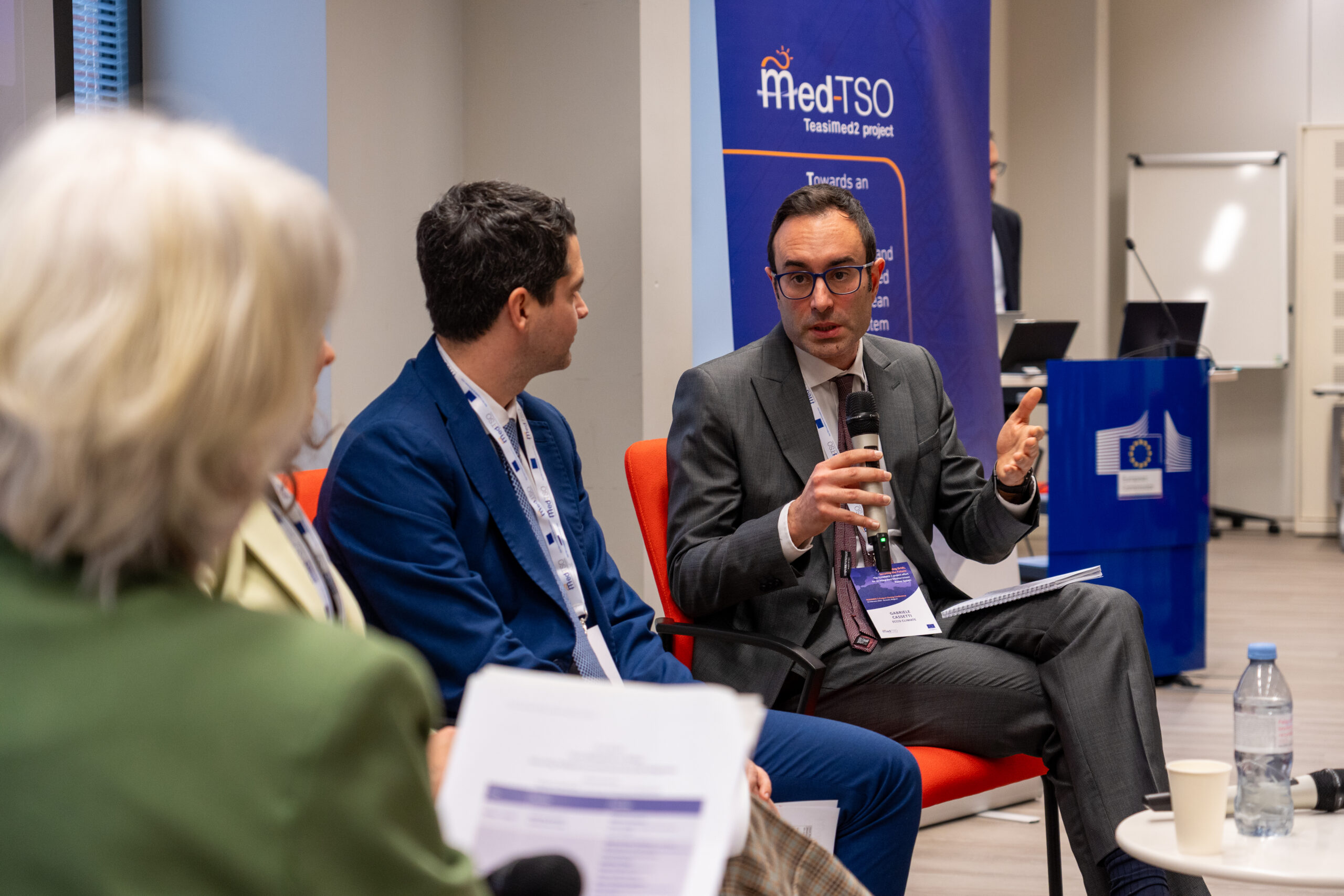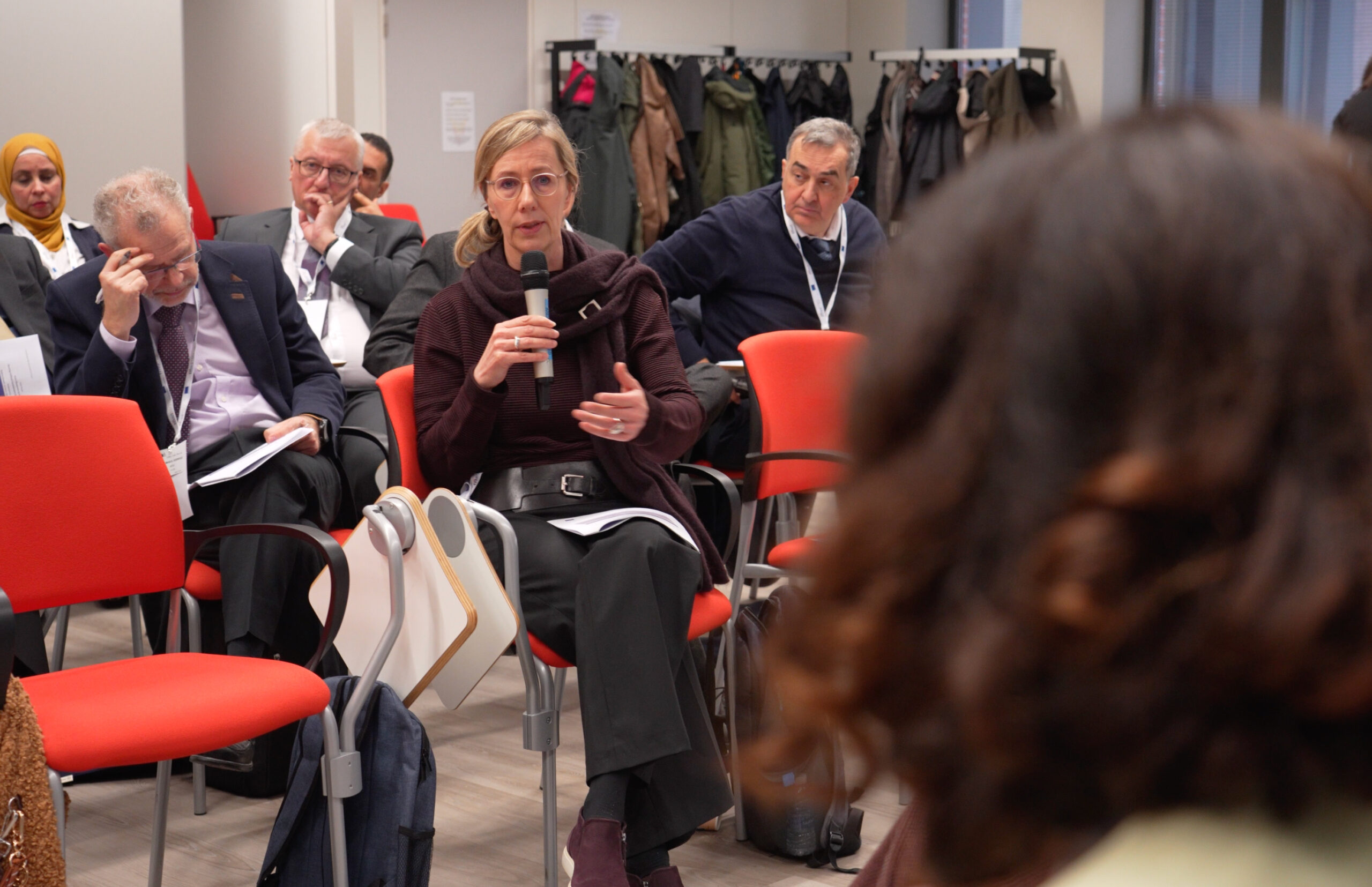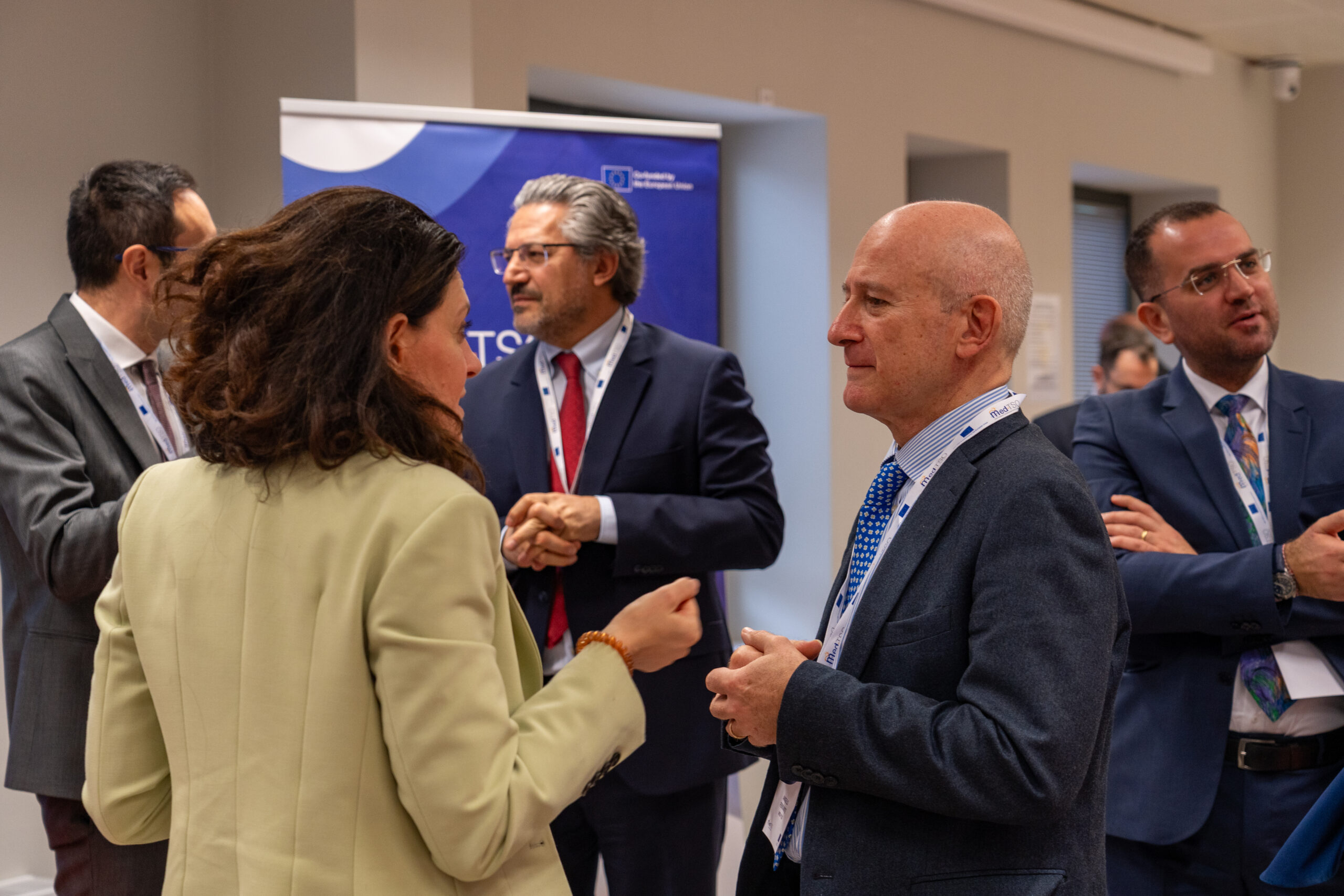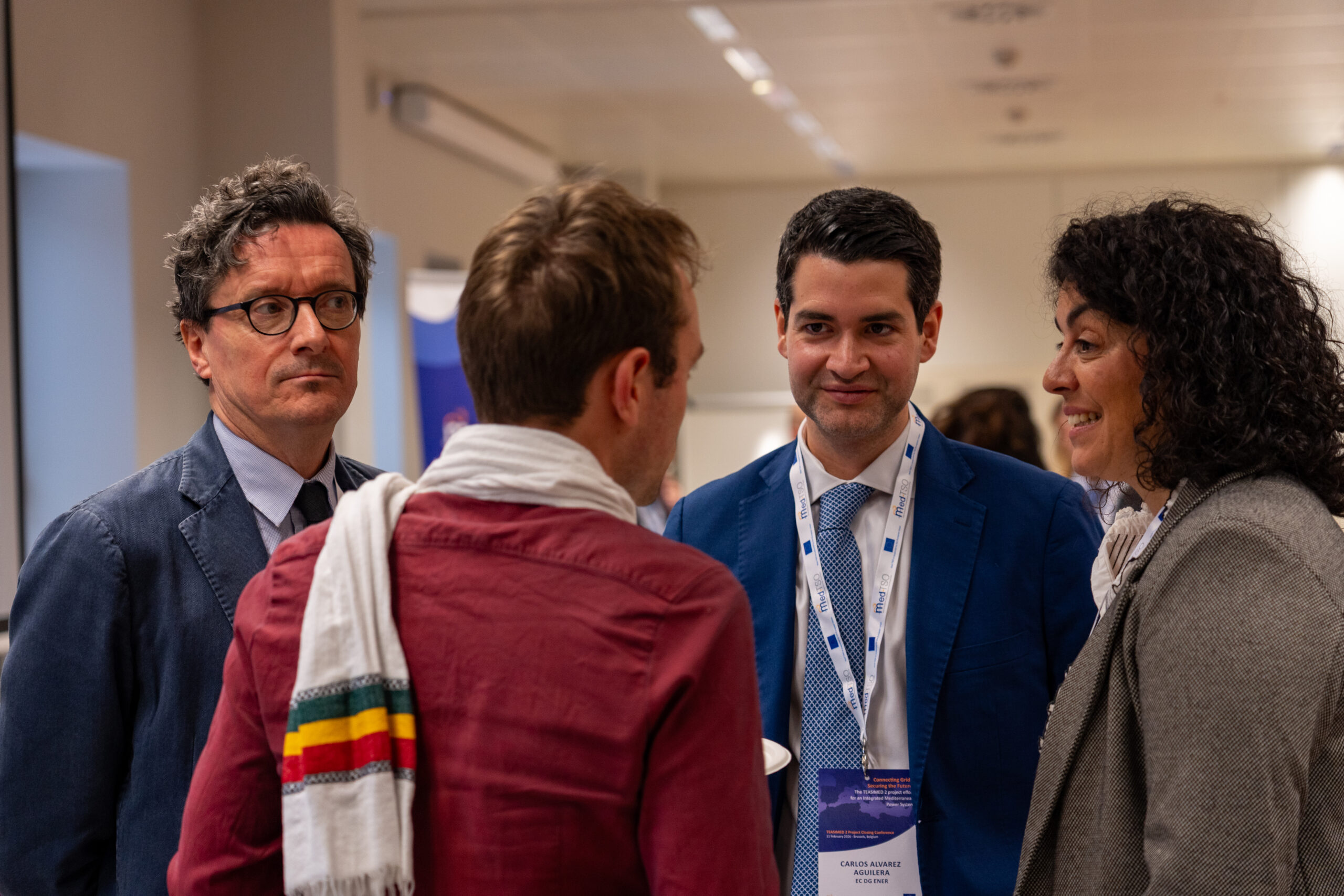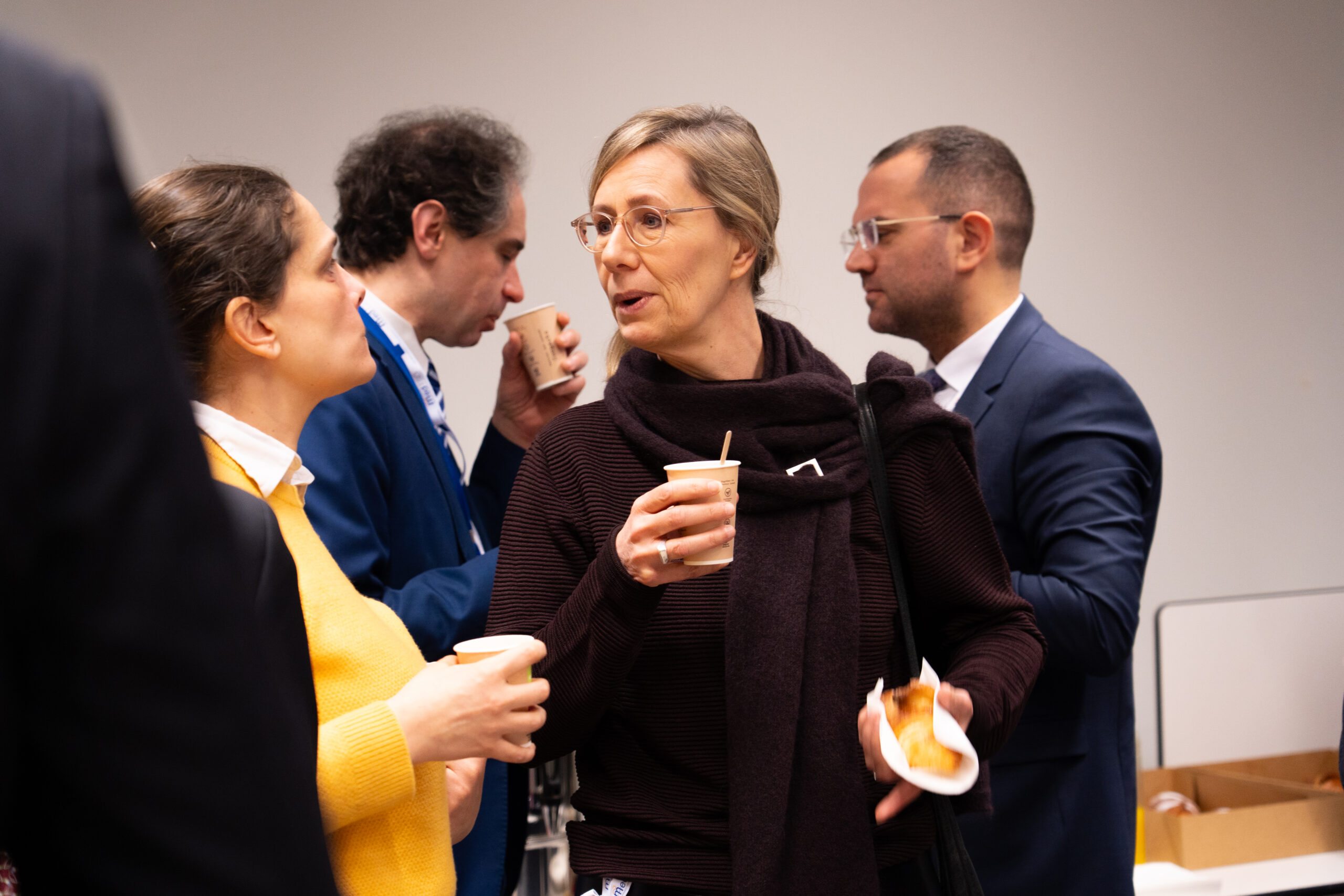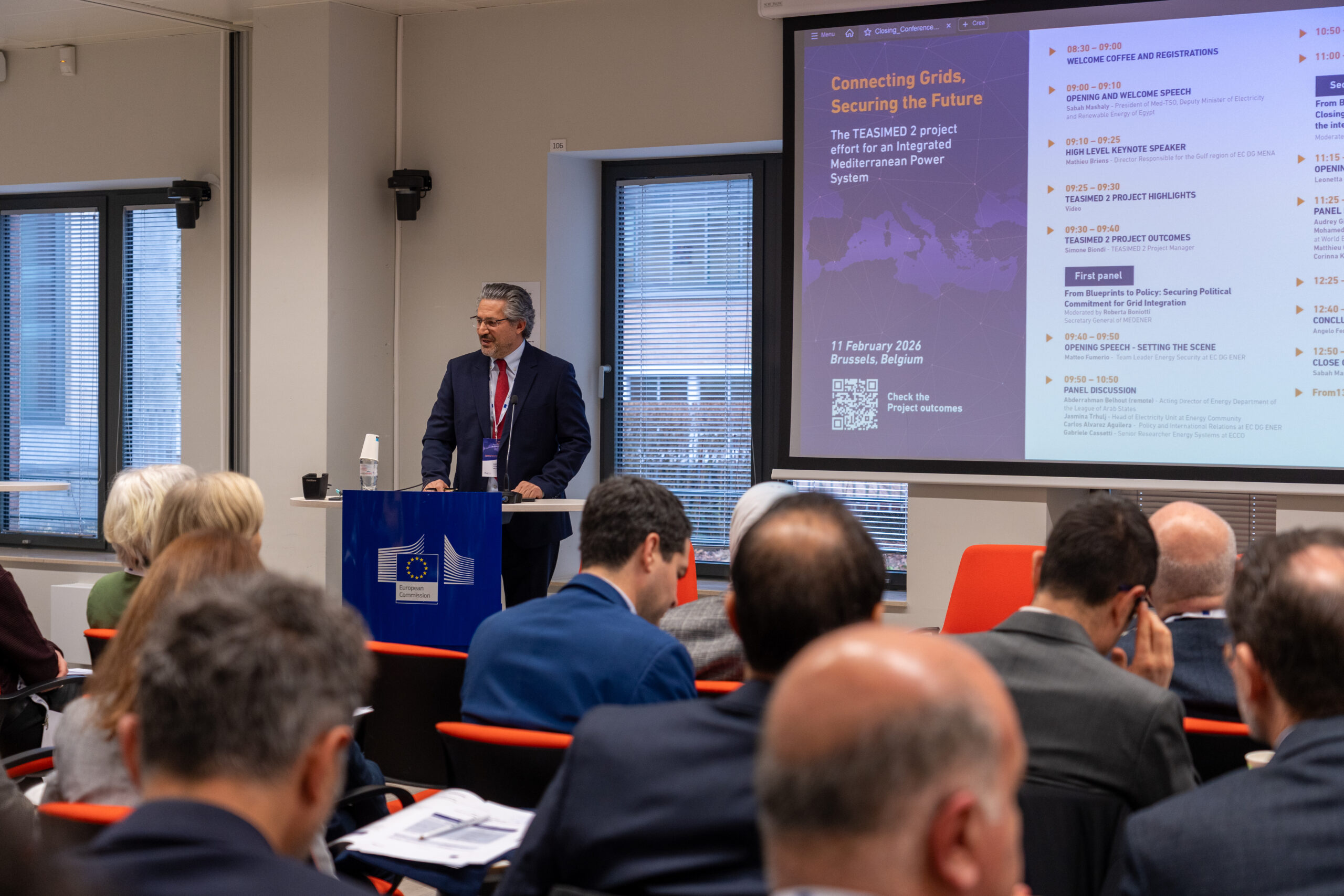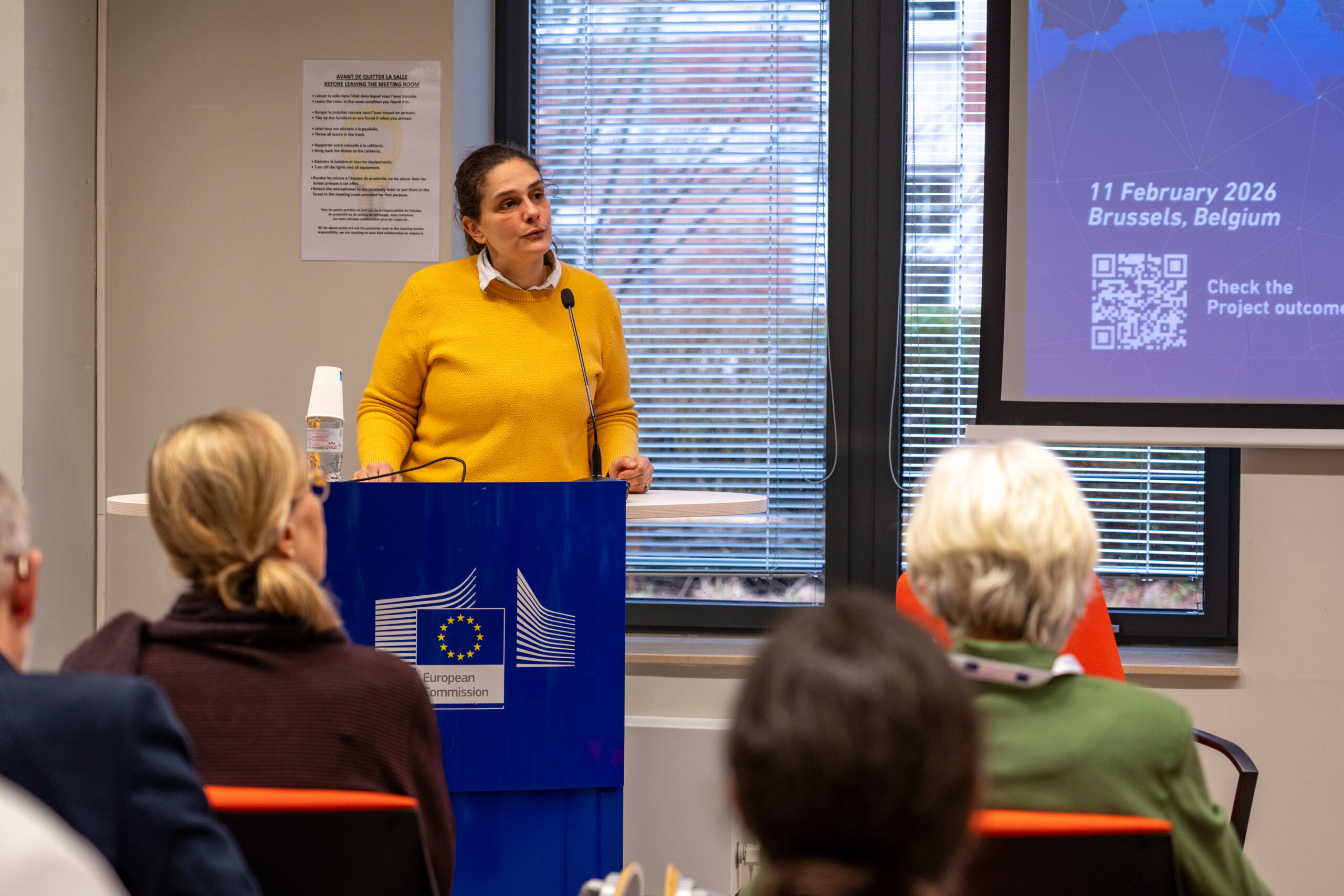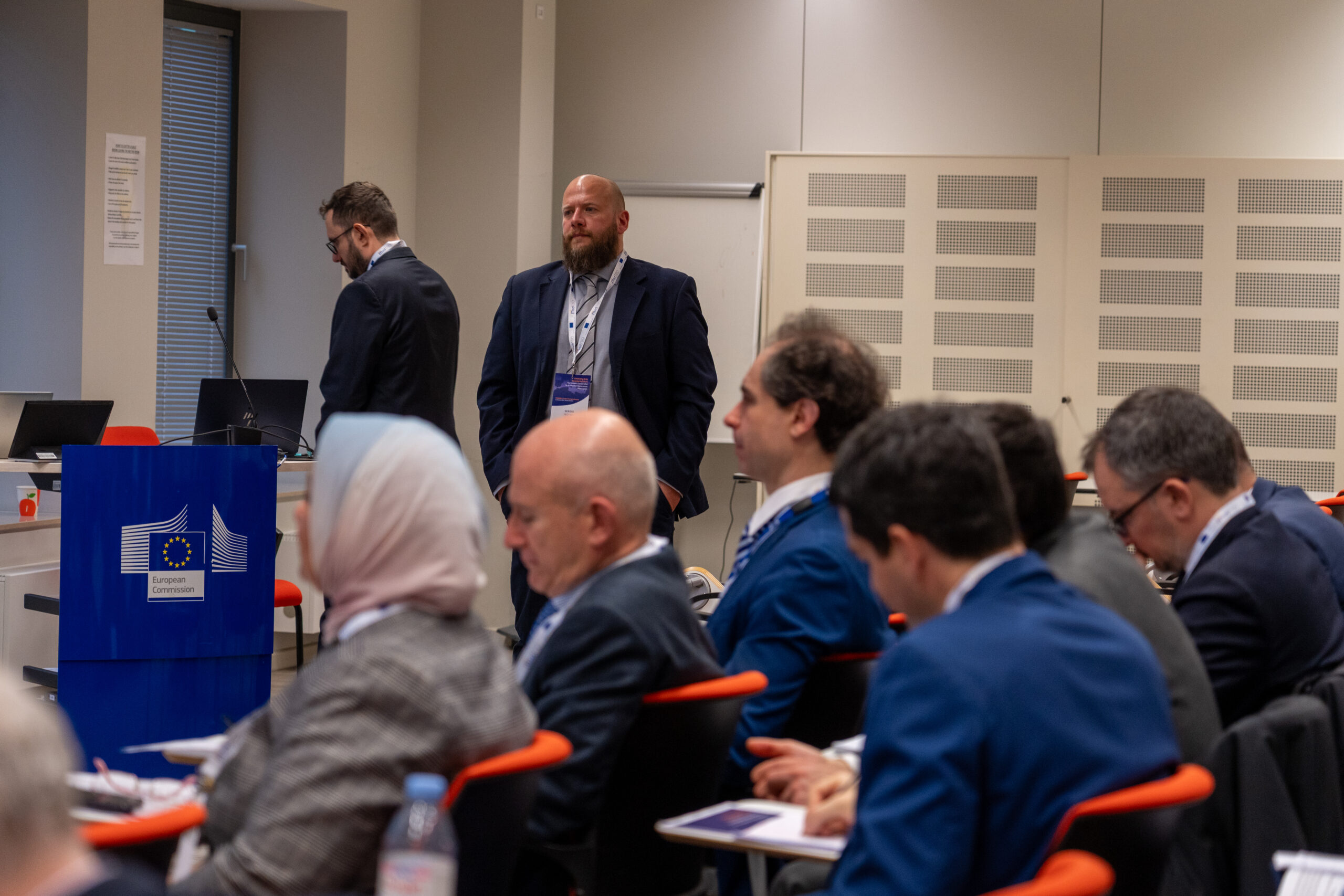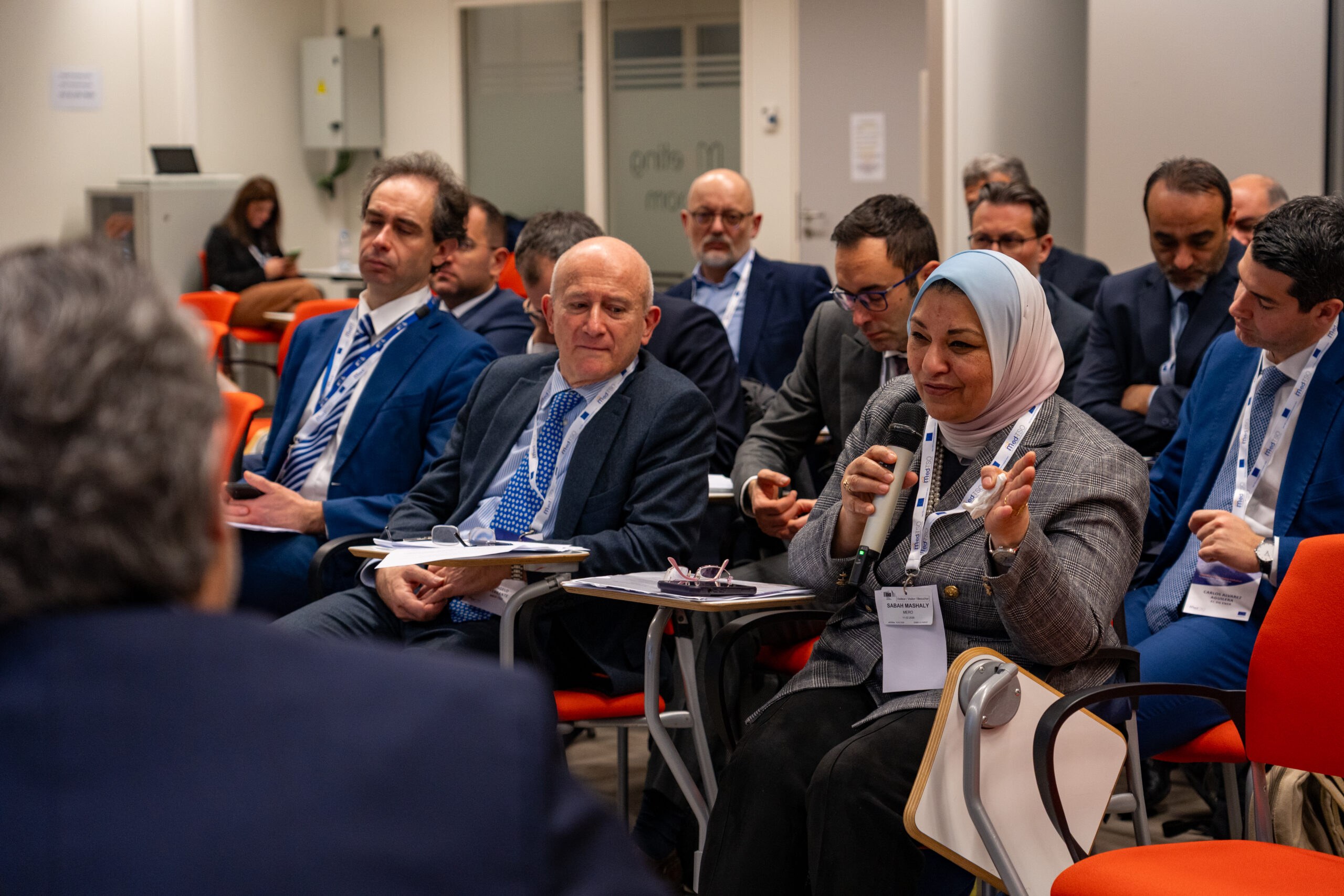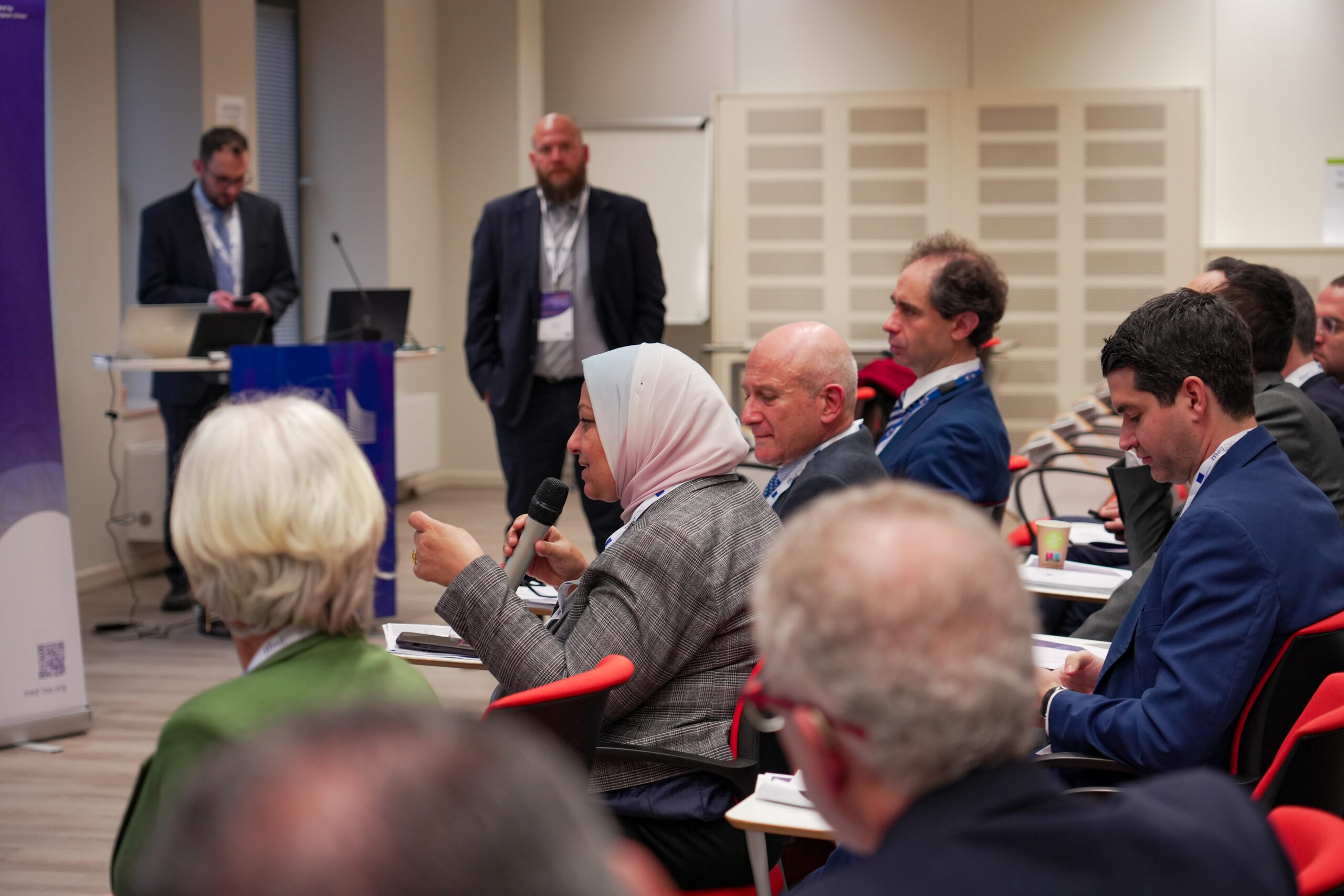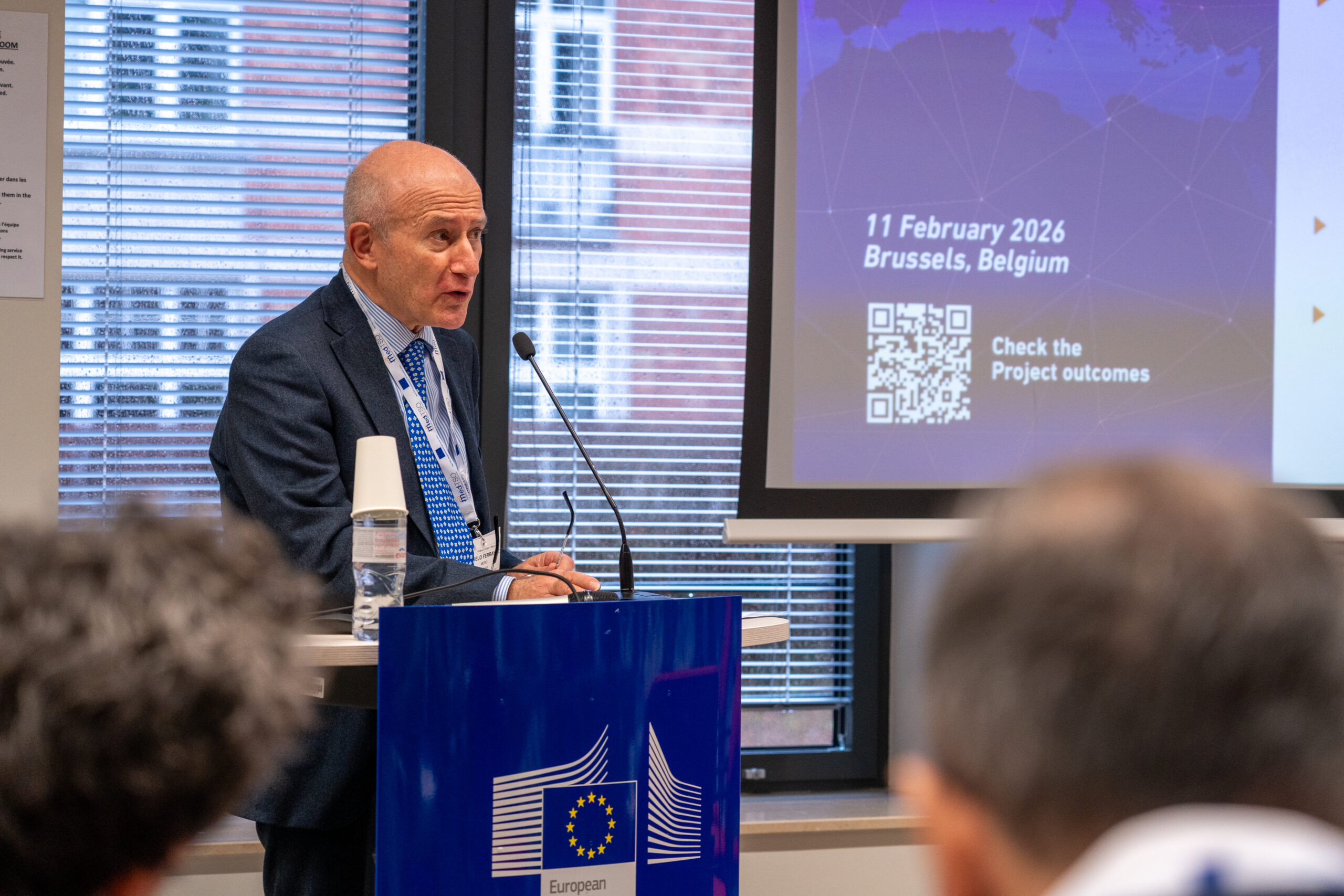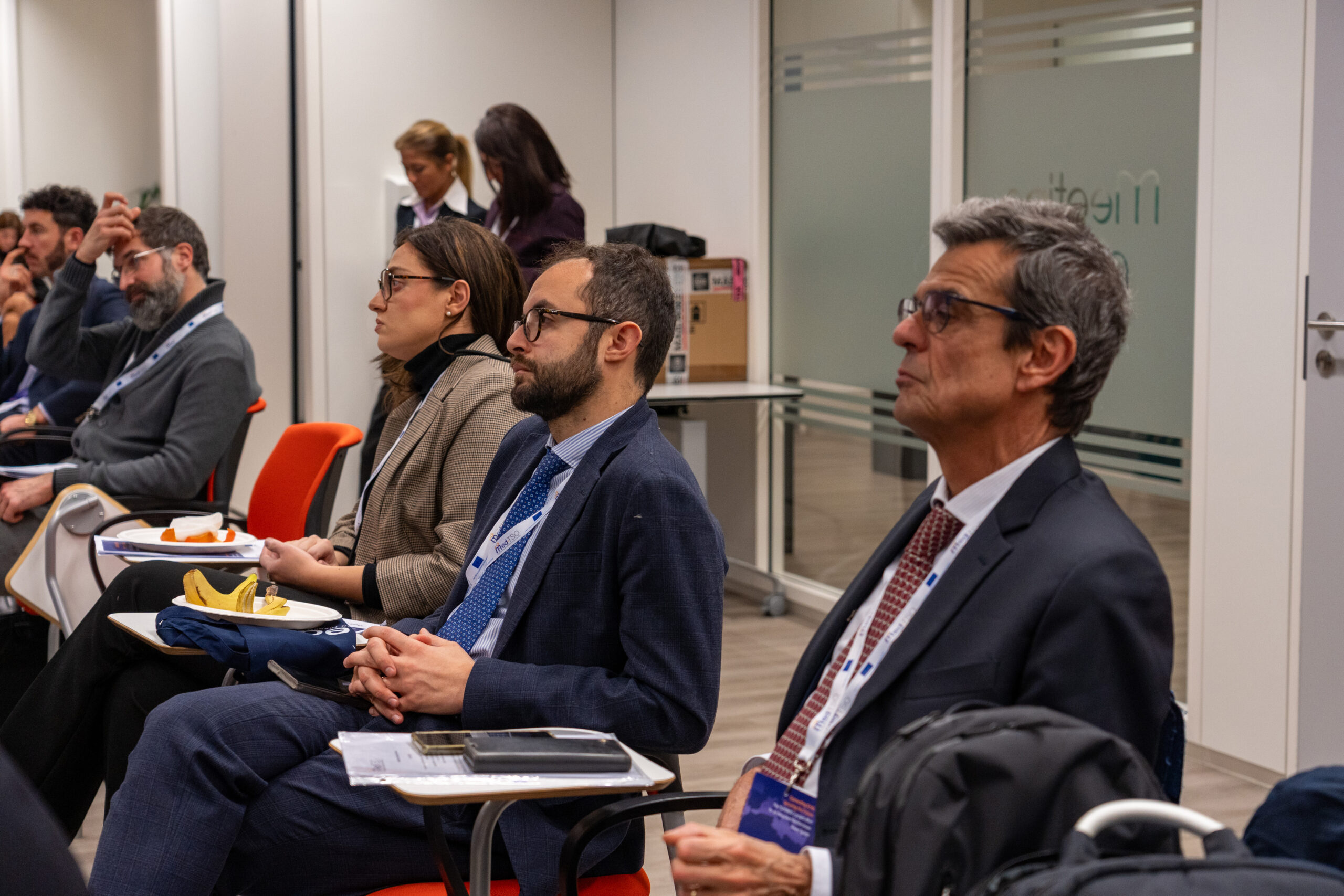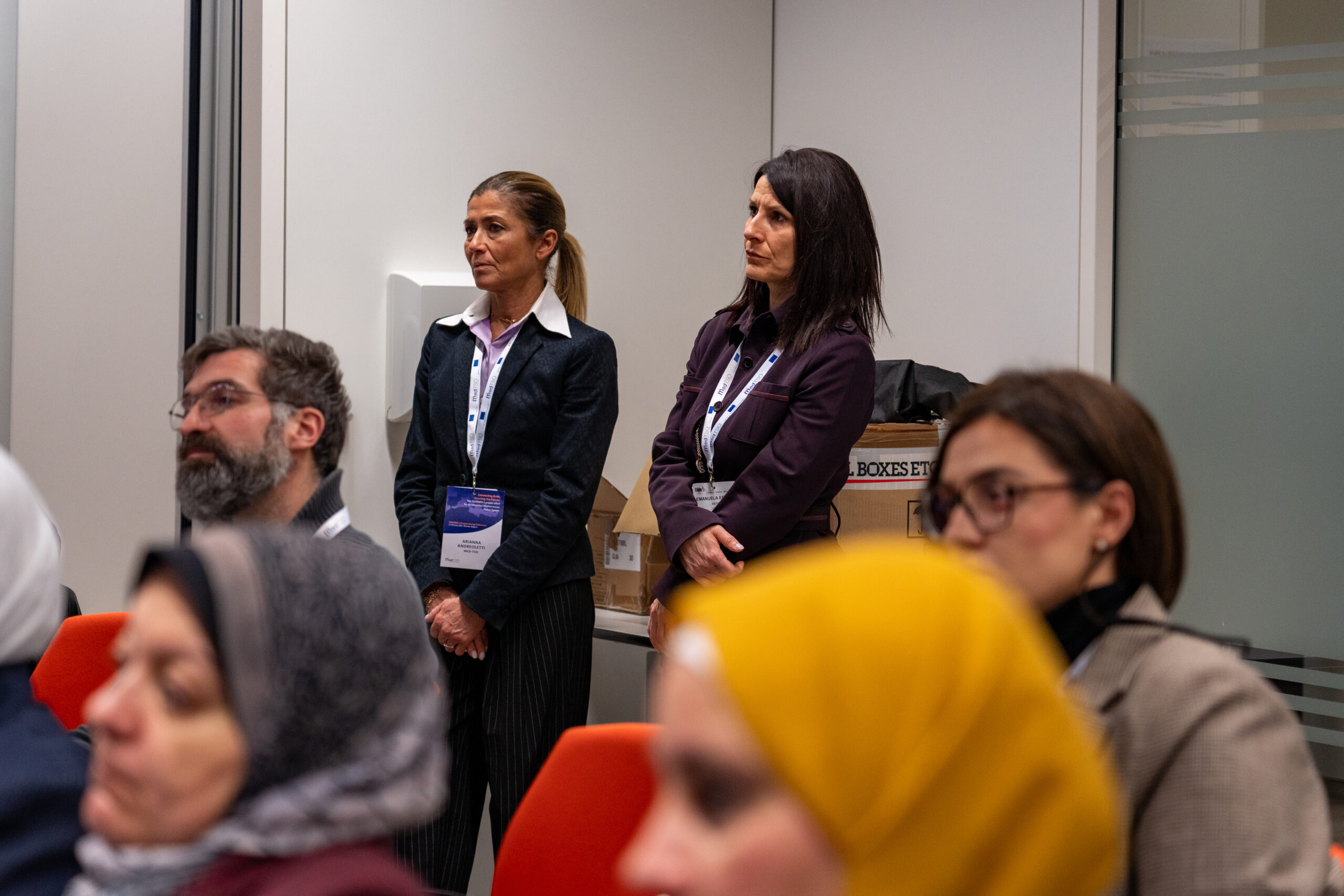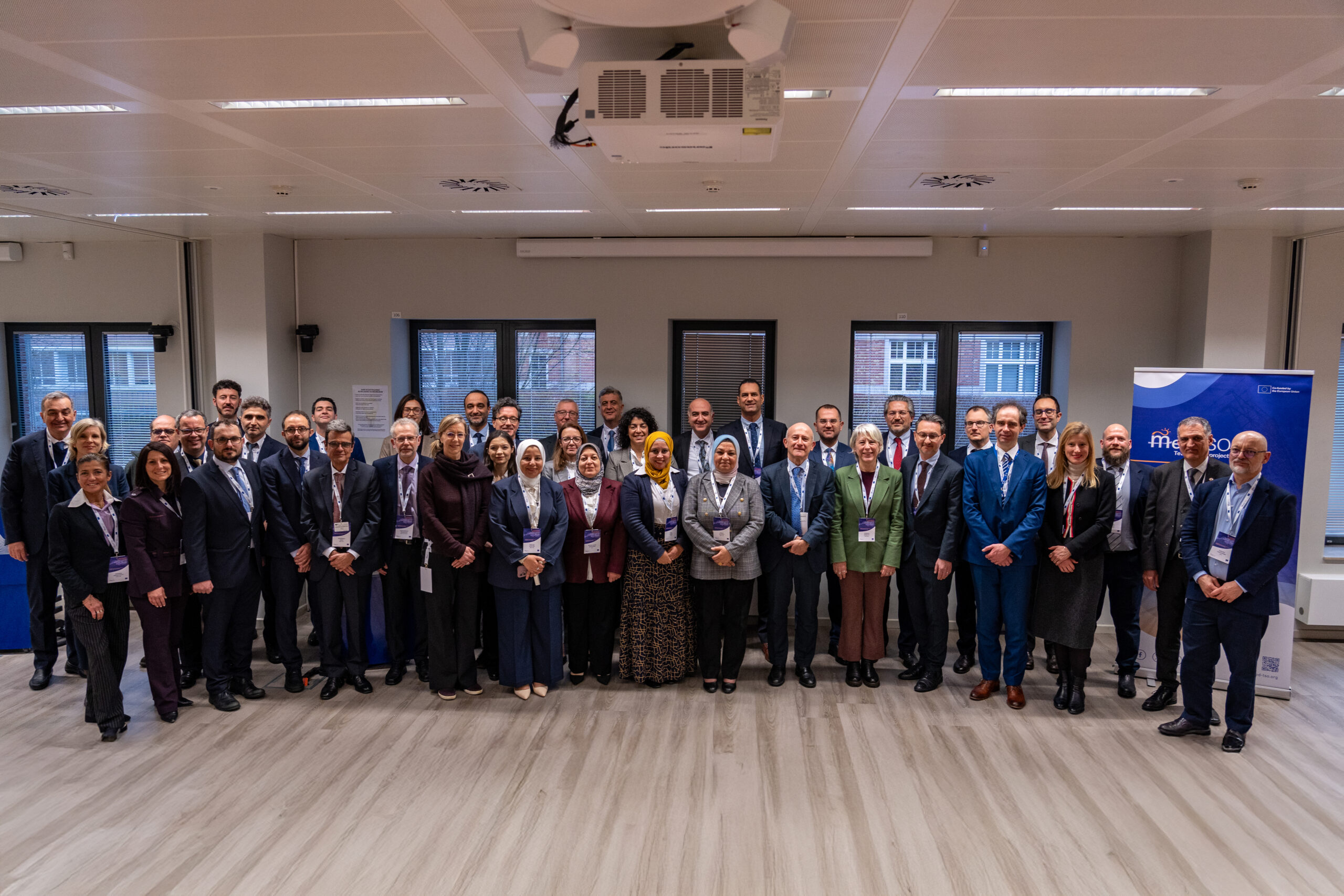

Under the theme “Connecting Grids, Securing the Future”, the TEASIMED 2 Closing Conference took place on 11 February 2026 in Brussels, bringing together the Mediterranean electricity community after three years of intensive technical work to move from results to action and explore the future of regional cooperation in power systems.
The conference was kindly hosted at the premises of the European Commission’s Directorate-General for the Middle East, North Africa and the Gulf, providing an emblematic setting to discuss the future of Mediterranean cooperation.
The event opened with welcome remarks by Sabah Mashaly, President of Med-TSO and Deputy Minister of Electricity and Renewable Energy of Egypt, who highlighted the strategic importance of multilateral cooperation among Mediterranean TSOs, the need to make better use of existing interconnections, and the role of Med-TSO in foresting a shared, bottom-up vision for regional system integration.
A high-level keynote by Mathieu Briens, Director responsible for the Gulf region at the European Commission (DG MENA), underlined the strategic importance of deepening Euro-Mediterranean energy cooperation, scaling up investment in renewable energy and interconnection infrastructure under the T-MED initiative, and reinforcing regulatory convergence and regional integration as key pillars for energy security and the clean energy transition.
Simone Biondi, TEASIMED 2 Project Manager, presented an overview of the project outcomes, showcasing the technical roadmap developed to support future Mediterranean interconnections.
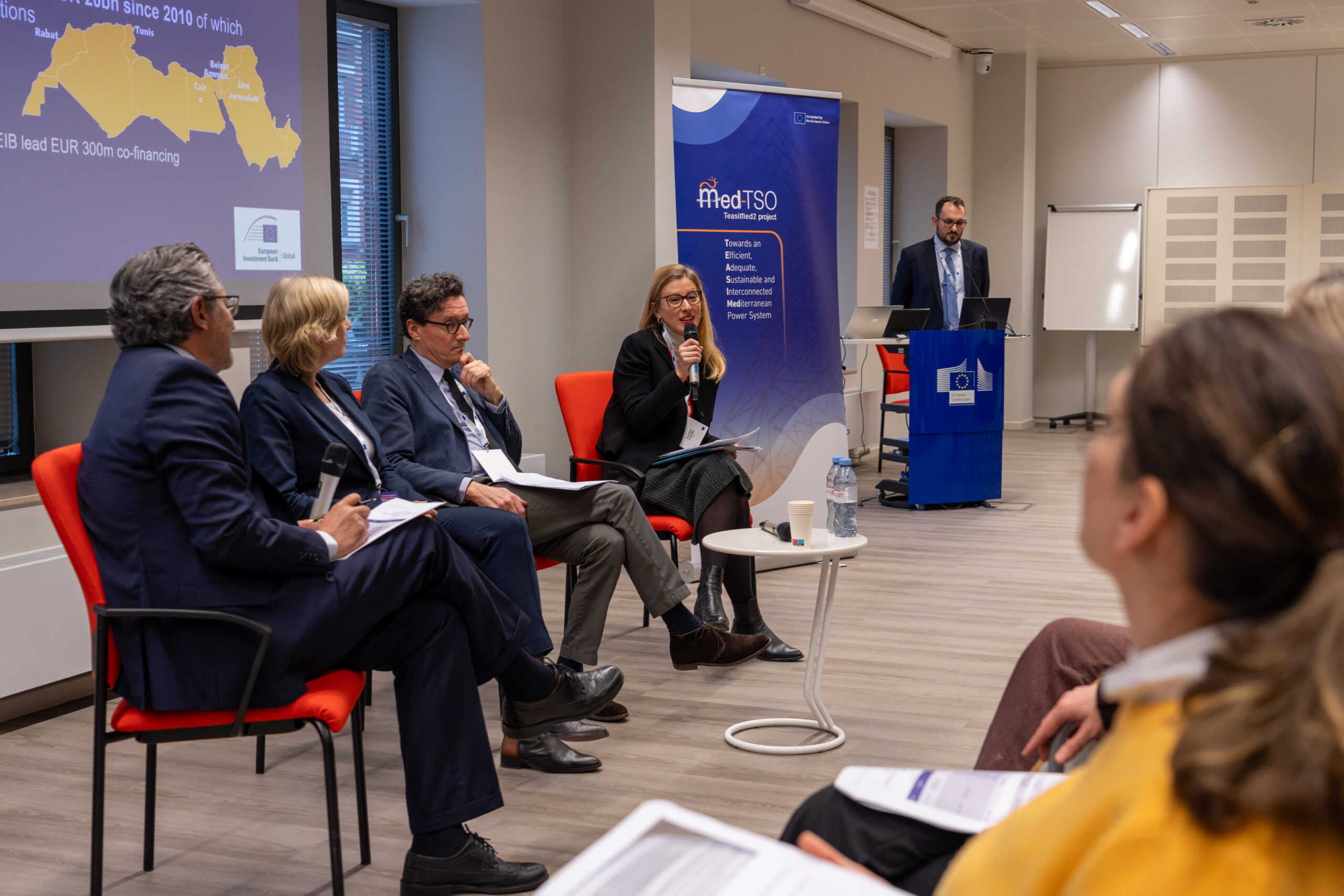
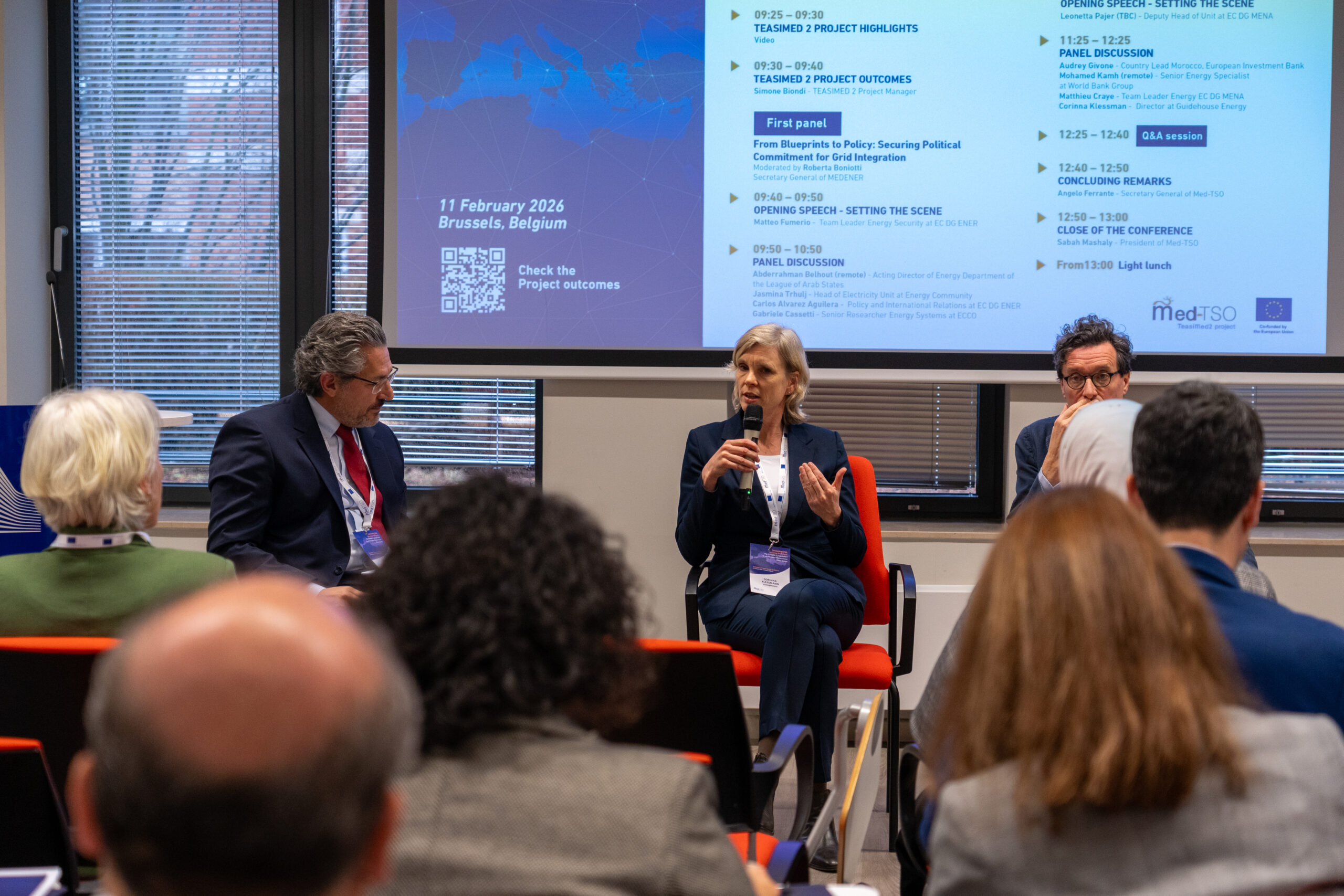
The conference discussions were organised around two panels, reflecting the main challenges identified by the TEASIMED 2 project.
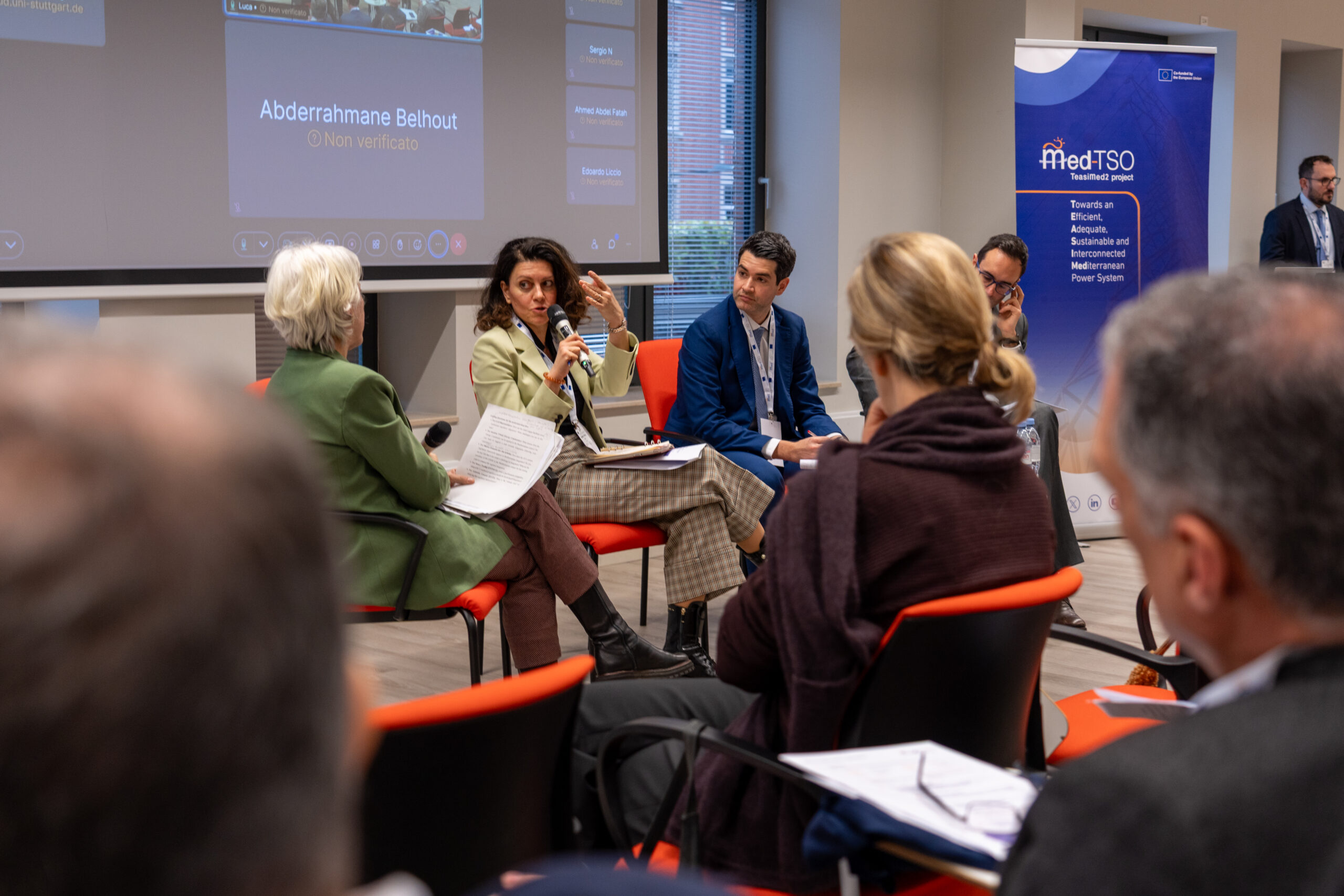
The first panel, “From Blueprints to Policy: Securing Political Commitment for Grid Integration”, was preceded by introductory remarks by Matteo Fumerio, Team Leader Energy Security at the European Commission (DG ENER), who framed the discussion within broader EU engagement under the Pact for the Mediterranean and the T-MED initiative, highlighting the need to combine technical cooperation, regulatory convergence and political commitment to strengthen Euro-Mediterranean energy integration. Moderated by Roberta Boniotti, Secretary General of MEDENER, the panel brought into dialogue representatives including Abderrahman Belhout, Acting Director of the Energy Department of the League of Arab States; Jasmine Trhulj, Head of Electricity Unit at the Energy Community; Carlos Alvarez Aguilera, Policy and International Relations Officer at the European Commission (DG ENER); and Gabriele Cassetti, Senior Researcher on Energy Systems at ECCO. The discussion highlighted the need for sustained political commitment, regulatory convergence and stable market frameworks to translate technical plans into concrete regional integration.
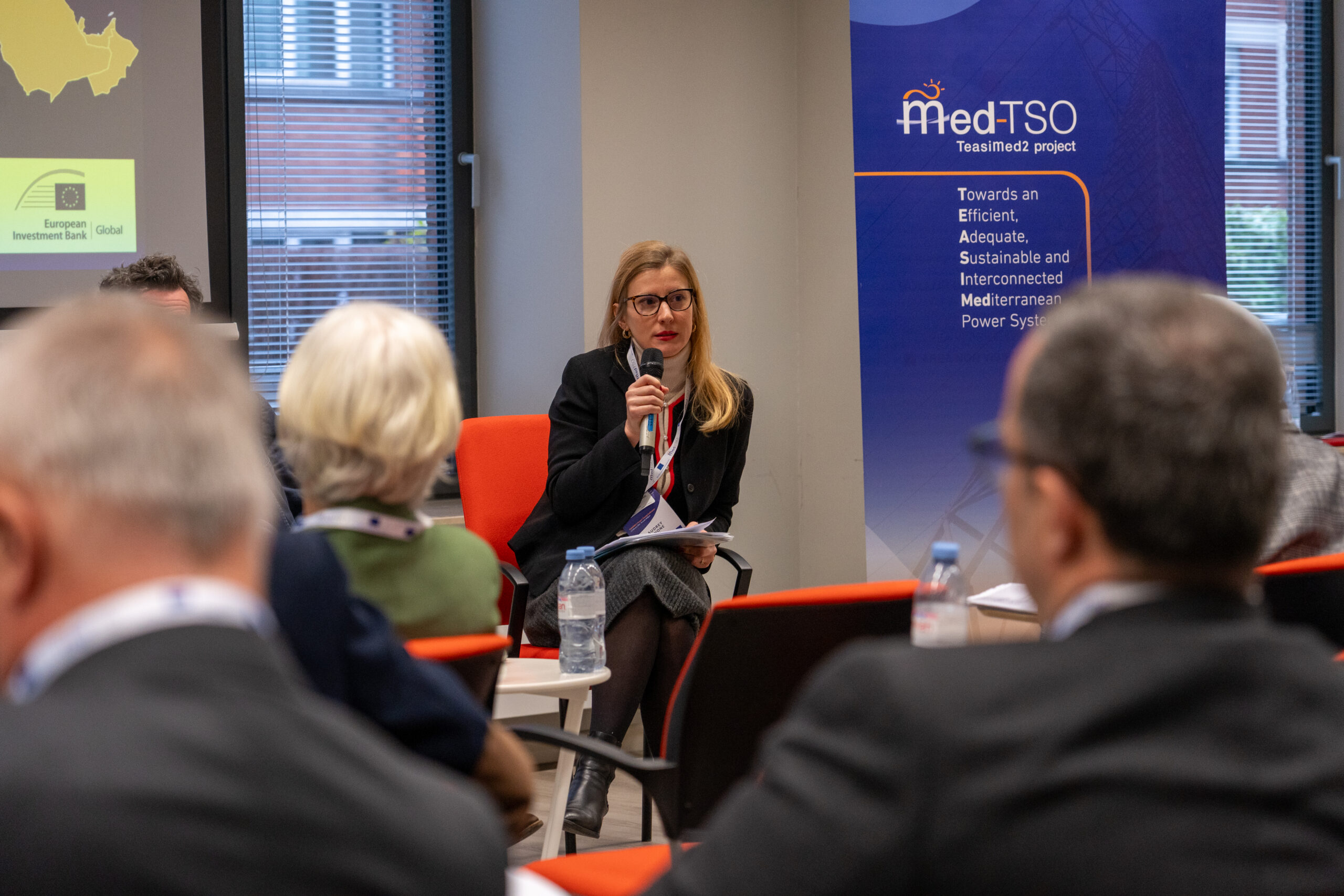
The second panel, “From Blueprints to Bankability: Closing the Investment Gap for Interconnections in the Mediterranean”, was introduced by EC representative Leonetta Pajer, Deputy Head of Unit at DG MENA, who emphasised that while interconnections are strategically vital for renewable integration, cost reduction and energy security, the key challenge now lies in securing financing through stronger regional coordination, regulatory predictability and early engagement with financial institutions under the T-MED framework. Moderated by Hasan Ozkoc, Director General of MEDREG, the panel included Audrey Givone (Country Lead Morocco, European Investment Bank), Mattieu Craye (Team Leader Energy, EC DG MENA) and Corinna Klessmann (Director, Guidehouse Energy). The discussion focused on aligning political commitment, regulatory frameworks and financial instruments to unlock bankable interconnection projects, bridge the investment gap and mobilise both public and private capital across the region.
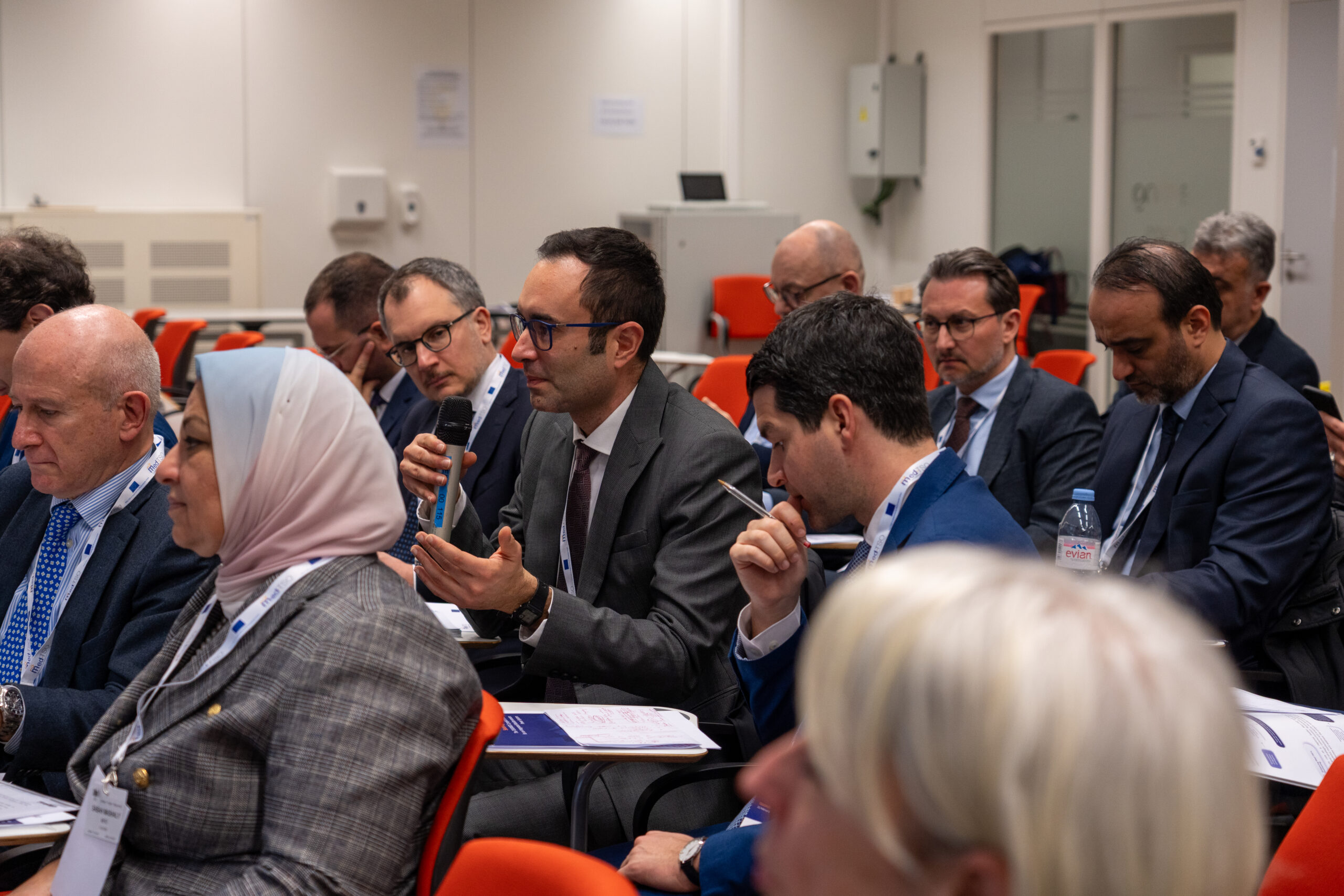
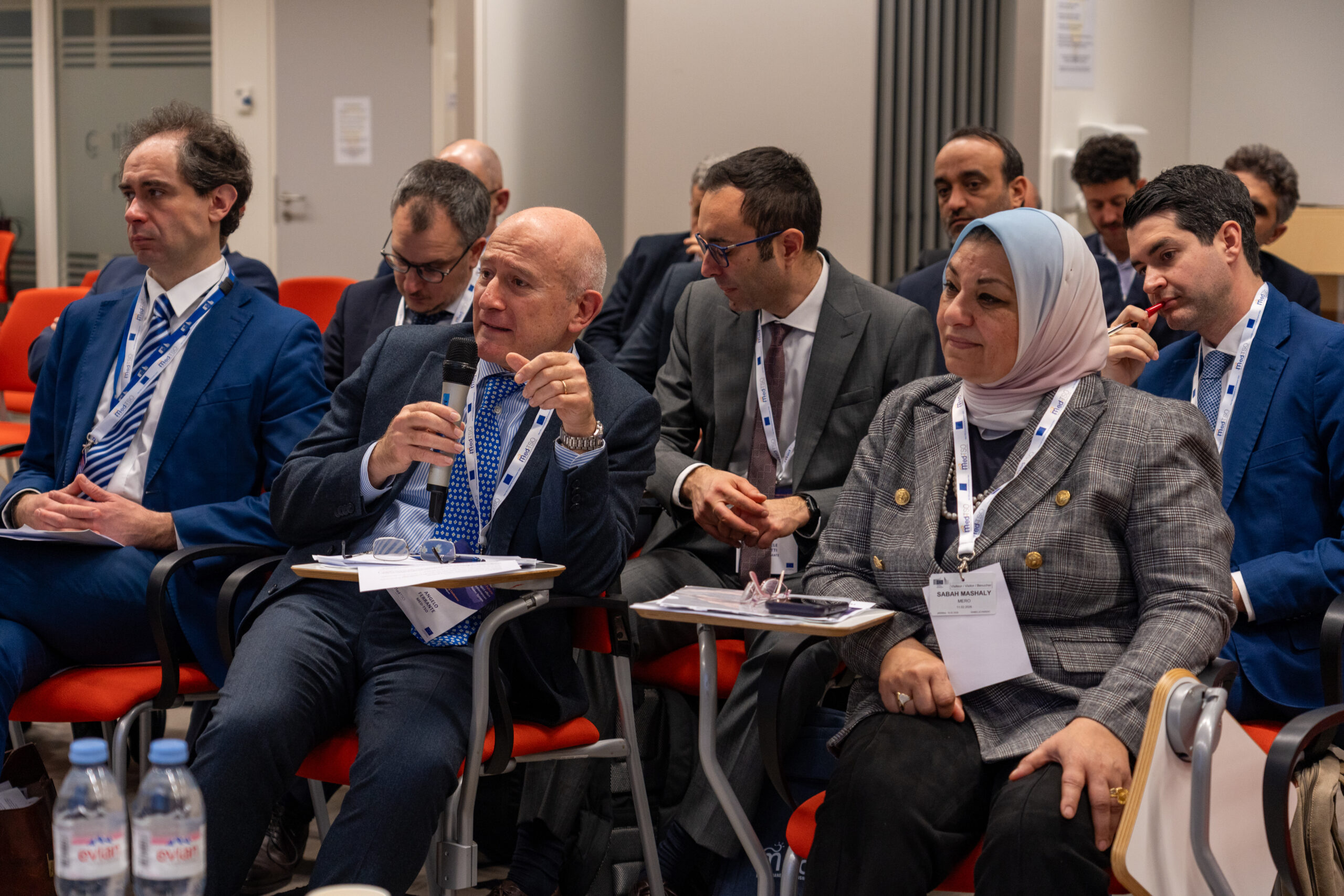
In the concluding session, Angelo Ferrante, Secretary General of Med-TSO, stressed that TEASIMED 2 marks a turning point for Mediterranean power system integration, having delivered a robust and technical roadmap demonstrating the benefits of improved efficiency, resilience and large-scale renewable integration.
With TEASIMED 2 successfully concluded, the journey continues with TEASIMED 3, running through 2029. The priorities of the new project will be to turn technical results into concrete regional actions, strengthen Mediterranean power system cooperation and expand collaboration to neighbouring regions. Building on the 2025-2030 Action Plan, TEASIMED 3 will focus on renewable energy integration, long-term grid planning, infrastructure interoperability, enhanced data exchange and reinforced knowledge sharing.